NHL Futures Betting: Season-Long Markets and How to Approach Them
 Available in US
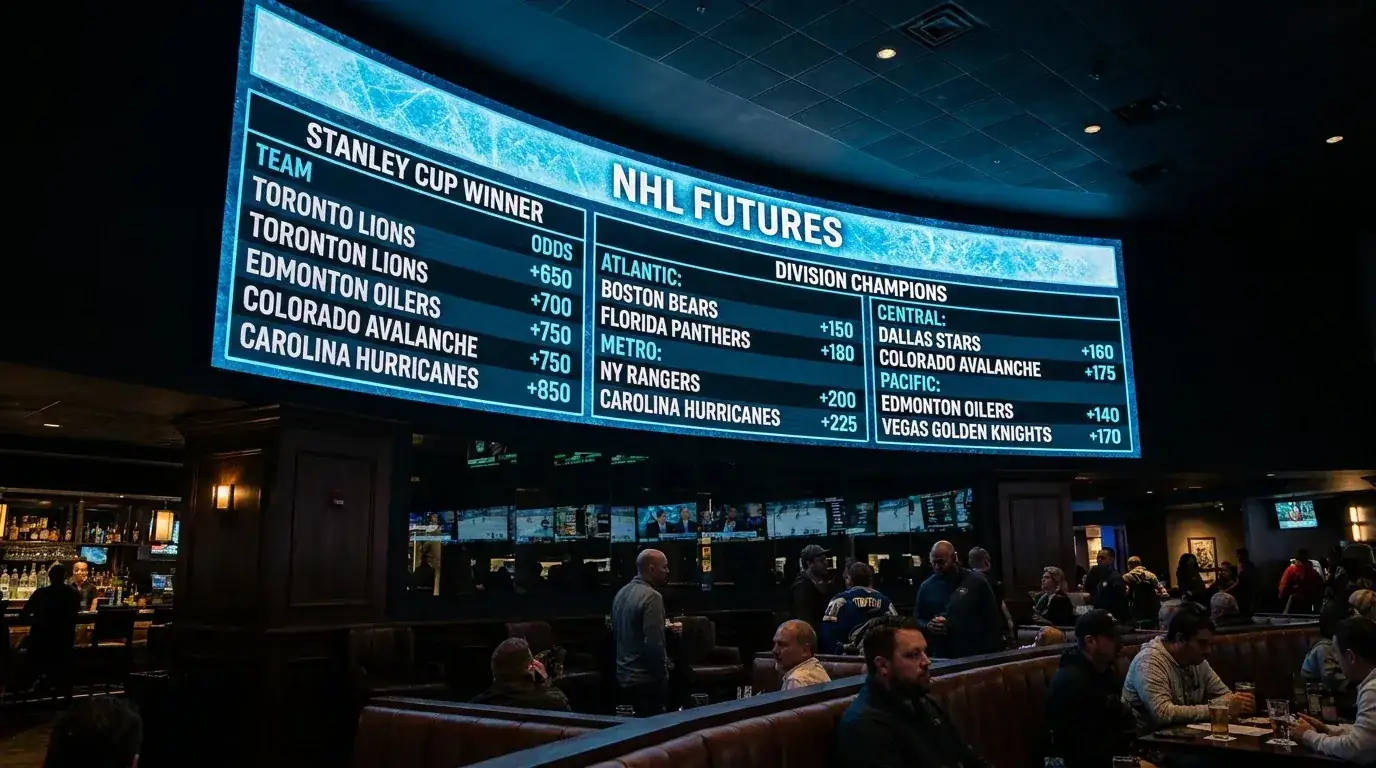
Locking In Prices Before the Season Starts
Every September I sit down with a spreadsheet, a cup of coffee, and the freshly posted NHL futures board. It is one of my favourite rituals in the betting calendar — the one time of year when bookmakers are pricing teams based on projections rather than results, and the widest gaps between perception and reality tend to appear. A league generating record revenue north of 7 billion USD and climbing is attracting more betting volume each season, which means futures markets are deeper and more liquid than they were even three years ago.

Futures are long-term bets placed on outcomes that will not be settled for weeks or months. You are locking in a price today on something that resolves in April, May, or June. The advantage is that pre-season prices are often softer — shaped by public sentiment, offseason hype, and narrative rather than in-season performance data. The disadvantage is that your money is tied up for the duration, unable to be redeployed on nightly markets until the bet settles or you cash out.
That capital commitment is the cost of early entry. In exchange, you get prices that will shorten dramatically if your selection starts the season strong. A team priced at 15.00 to win the Stanley Cup in September might be 6.00 by January if they sit atop their division — and at that point, anyone who locked in 15.00 holds an asset worth more than they paid for it, whether or not the team ultimately wins the Cup.
Types of NHL Futures: Cup, Conference, Division, Awards
The Stanley Cup winner market is the flagship, but it is far from the only futures game in town. Conference winners (Eastern and Western) offer shorter fields and correspondingly shorter odds. Division winners narrow the field further — four divisions of eight teams each — and these markets often present the best value-to-risk ratio because bookmakers price them with less precision than the headline Cup market.

Individual awards futures — Hart Trophy for MVP, Vezina for best goaltender, Calder for top rookie, Norris for best defenceman — attract a different kind of bettor. These markets are smaller in volume, meaning prices can be stickier and slower to adjust. If you identify a breakout candidate early, particularly for the Calder Trophy where the pool of eligible players is limited, the pre-season price can be orders of magnitude better than the mid-season price.
Team win totals operate like a season-long over/under. The bookmaker sets a line — say, 95.5 points — and you bet whether the team finishes above or below. This market appeals to bettors who have a strong view on a team’s trajectory but do not want to commit to an outright winner prediction. A team you expect to improve from 88 points last season to 100 points this season represents clear over value at 95.5, even if you do not believe they will win their division. For a deeper look at this market, I have written separately about season win totals and how to find in-season value.
When to Place NHL Futures for Maximum Value
Timing is everything in futures, and there are three distinct windows where value concentrates. The first is immediately after the season ends, when bookmakers post next season’s board based on the current roster and draft position. This is the widest market, with the least information baked in, and it rewards bettors who follow offseason moves closely.
The second window opens after the major free-agency period in July. Roster reshuffling can dramatically alter a team’s outlook, and bookmakers are slow to reprice if the volume of futures bets is still low during the summer. A team that quietly adds a top-four defenceman or a proven backup goaltender might not see its Cup odds shorten for weeks.
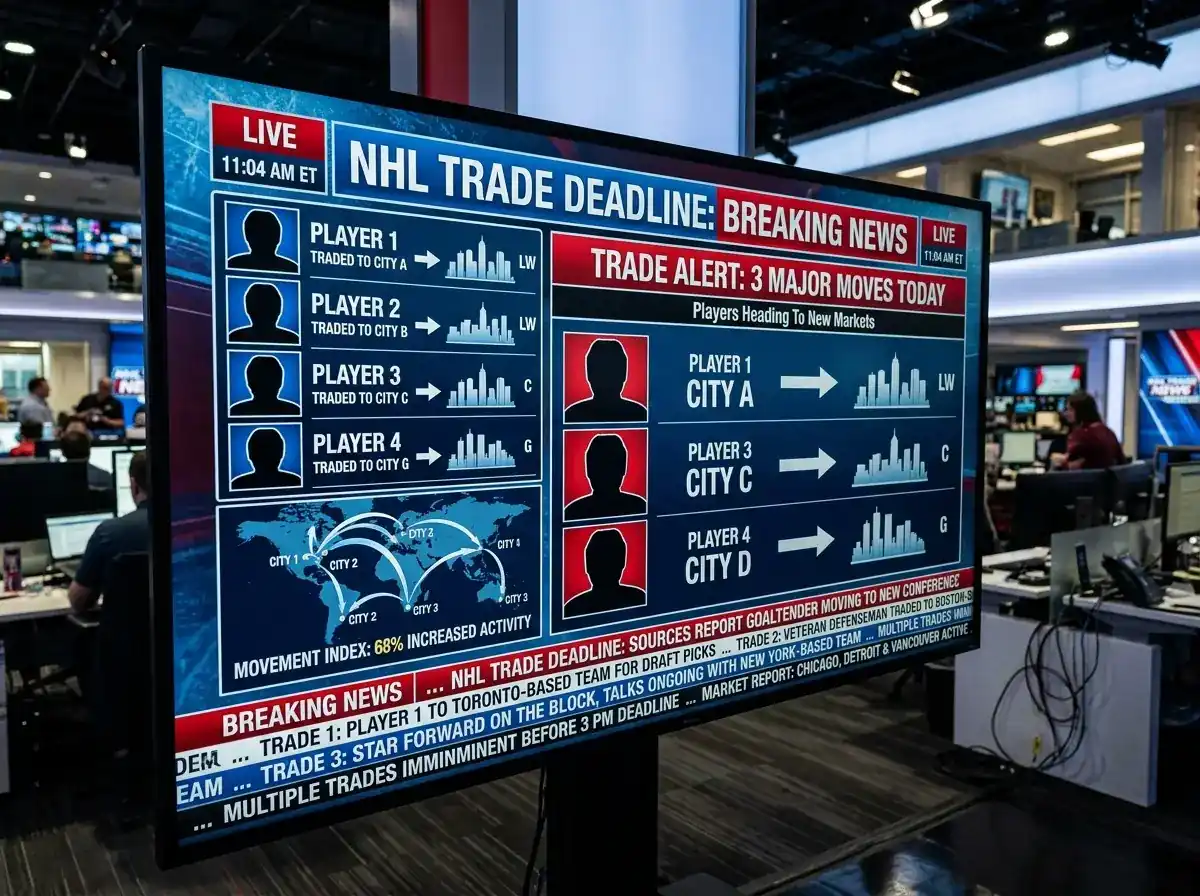
The third window arrives at the trade deadline in March, when contenders add reinforcements and pretenders sell off assets. Prices have shortened by this point, but a well-timed bet on a team that has just acquired a missing piece — say, a first-line centre to complement an already strong roster — can still offer value if the market has not fully absorbed the implications of the trade.
The salary cap shapes all three windows. With the NHL cap ceiling rising from 95.5 million USD in 2025/26 to a projected 104 million in 2026/27, teams operating near the ceiling will have new flexibility to add talent. Tracking which teams have cap space heading into each window gives you a structural edge in identifying which rosters can improve and which are locked in place.
Hedging and Managing Dead Futures
Not every futures bet reaches a clean resolution. Injuries, trades, coaching changes, and underperformance can turn a promising selection into a dead ticket well before the season ends. The question is what to do about it.
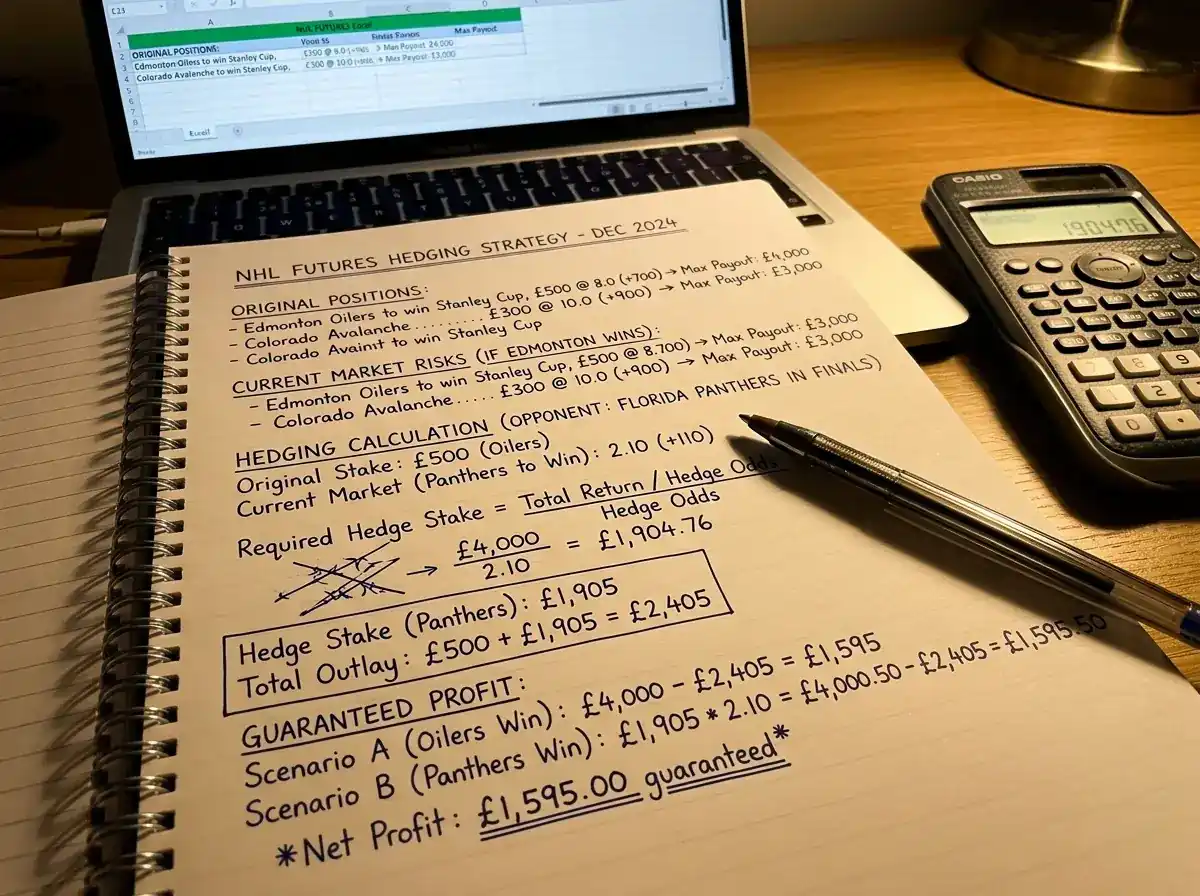
Hedging is the primary tool. If your Cup winner selection reaches the Conference Finals, you can bet on their opponent to lock in a profit regardless of outcome. The math is straightforward: if you hold a 10 GBP bet at 15.00 that is now a 50/50 proposition, that ticket is worth 75 GBP in expected value. Betting 35 GBP on the other side at even money guarantees you walk away with a profit no matter which team advances.

Dead futures — bets on teams that are clearly out of contention by midseason — are harder to manage. Some bookmakers offer cash-out on futures at a reduced value, and taking a partial loss early is sometimes the right call if you can redeploy that capital into more promising positions. Other times, the residual odds are so long that the cash-out offer is negligible, and letting the ticket ride costs you nothing beyond the original stake.
With total franchise values across the NHL exceeding 67 billion USD collectively, the financial infrastructure behind the league ensures that competitive incentives remain strong — no team truly gives up before elimination is mathematically certain, because revenue sharing and playoff gates make every win valuable. That structural intensity is what keeps even long-shot futures alive deeper into the season than you might expect.
How early can I bet on NHL futures in the UK?
Most major UK bookmakers post Stanley Cup and conference winner odds within days of the previous season ending, typically in late June. Division winner and team win total markets usually appear in August or early September as rosters finalise. Award futures like the Hart and Vezina may not appear until closer to the season opener in October. Availability varies by operator, so check multiple bookmakers if you want the earliest possible entry.
Are NHL futures bets refunded if a season is shortened?
It depends on the bookmaker’s terms and conditions. During past disruptions, some operators voided futures and refunded stakes, while others settled based on standings at the point of cancellation. There is no universal rule. Read the specific futures settlement terms in your bookmaker’s rules section before placing the bet, particularly for season win totals where the number of games played directly affects the outcome.
Published by the NHL Hockey Bets team.