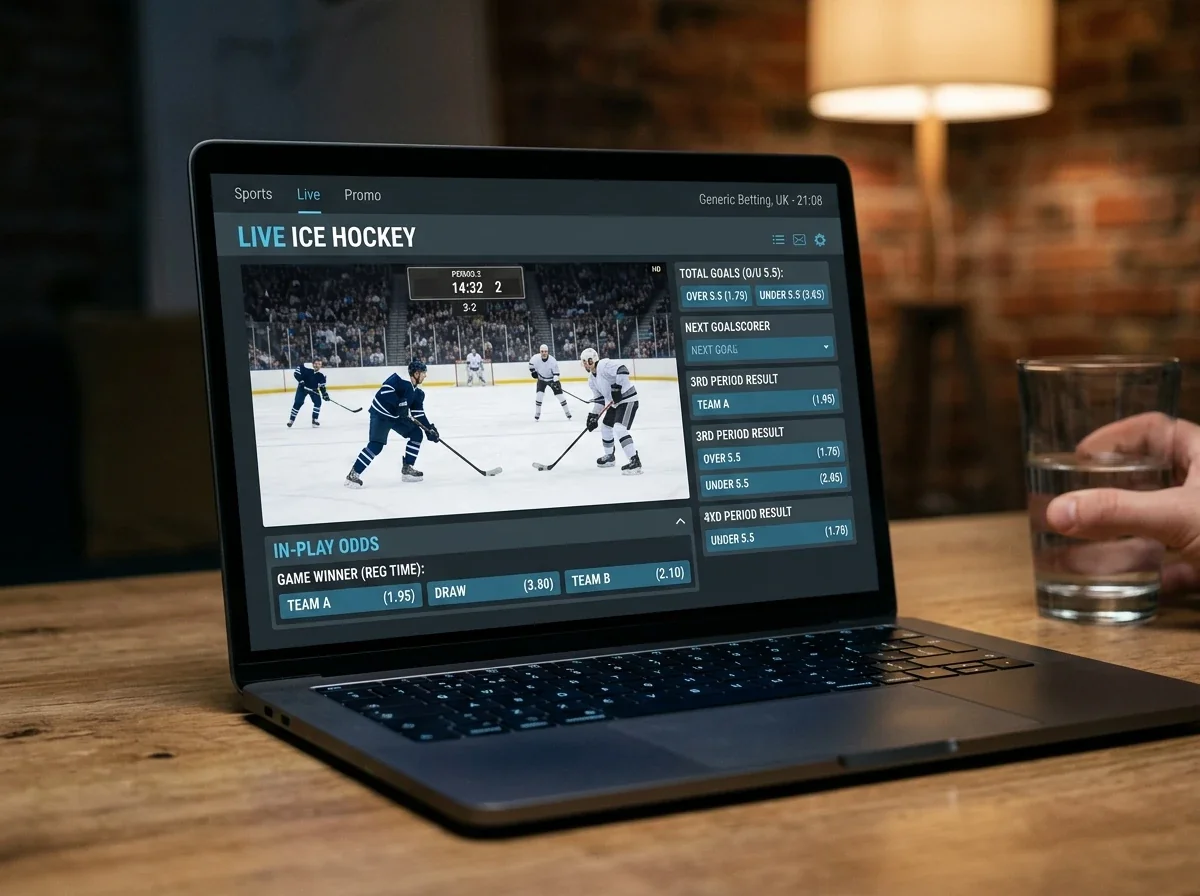
Best NHL Betting Sites UK: Bookmakers Ranked by Odds and Markets
 Available in US
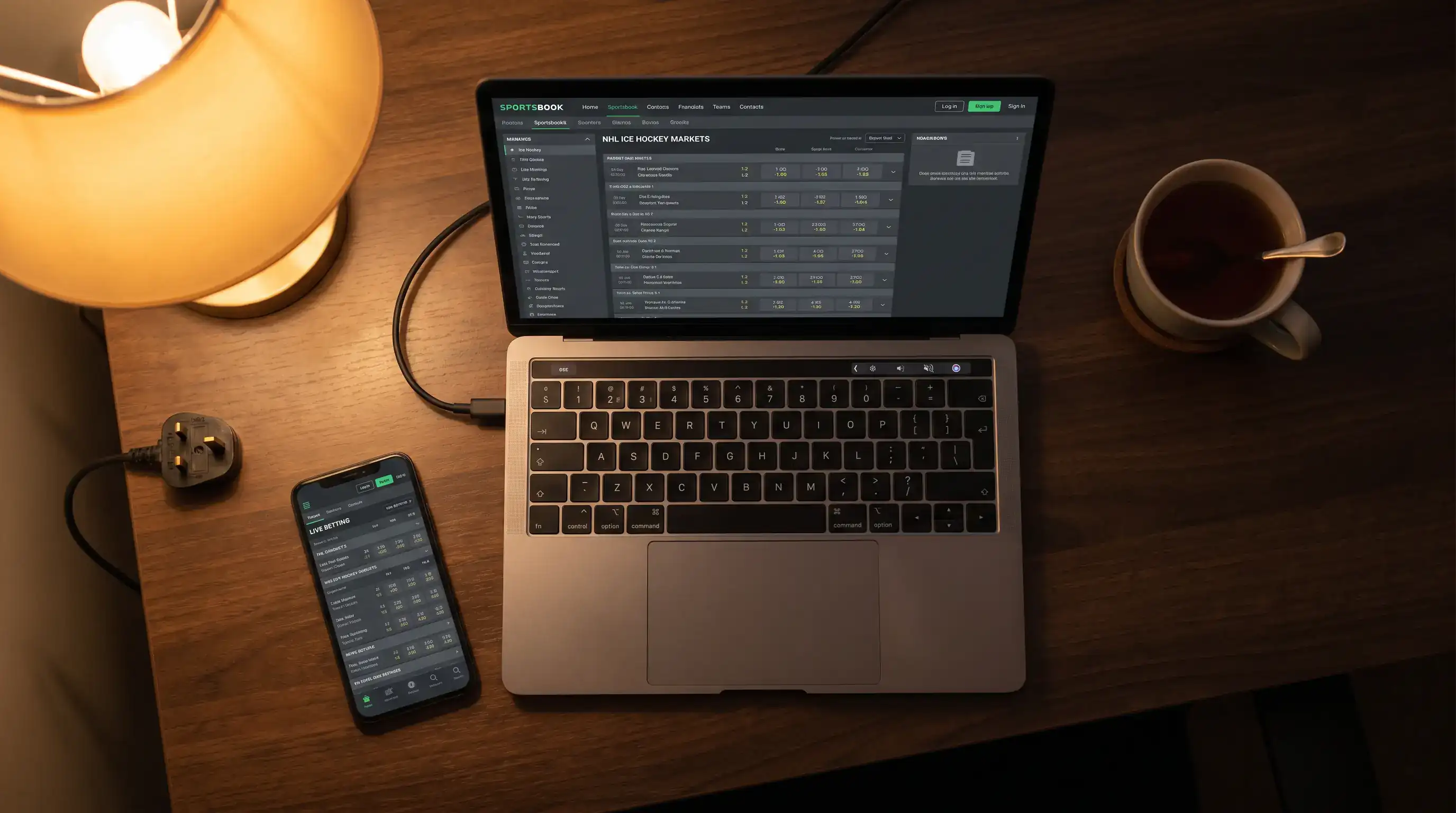
Table of Contents
- What Separates a Good NHL Bookmaker from a Generic Sportsbook
- How We Rank: Margins, Markets and NHL Coverage Depth
- UK Bookmaker Profiles for NHL Bettors
- NHL Market Range: What to Look For Beyond Moneyline
- Betting on NHL from Your Phone: App Quality and Speed
- UKGC Licensing and Operator Accountability
- Deposits, Withdrawals and Payment Methods
- NHL Betting Sites UK FAQ
What Separates a Good NHL Bookmaker from a Generic Sportsbook
Last winter I signed up for a bookmaker that advertised “full NHL coverage.” The reality was a moneyline and a total for each game — nothing else. No puck line, no period betting, no player props. For a sport where goaltender confirmation alone can swing a line by 20 cents, that kind of bare-bones offering is useless to anyone trying to bet with an edge. It taught me that not every sportsbook with an NHL tab actually cares about hockey.
The UK market has more than 80 online bookmakers licensed by the UK Gambling Commission, and the vast majority of them list NHL somewhere in their menu. But listing a sport and serving it well are different things. A genuinely good NHL bookmaker offers deep market coverage — moneylines, puck lines, totals, period markets, player props and same-game parlays at a minimum. It prices those markets competitively, with moneyline margins in the 4% to 6% range rather than the 8% or higher you occasionally find on operators that treat hockey as an afterthought. And it updates its odds promptly when goalie confirmations or injury news breaks, rather than leaving stale lines hanging until someone exploits them.
This guide does not hand you a ranked list of operators. Instead, it gives you the criteria to evaluate any bookmaker yourself — margin quality, market range, mobile experience, licensing integrity and payment efficiency — so you can make an informed choice based on what matters to your style of NHL betting. The operators will change over time; the criteria will not.
How We Rank: Margins, Markets and NHL Coverage Depth
Every bookmaker review site has a methodology. Most of them boil down to “which operator pays us the best affiliate commission.” I have no interest in that model. The criteria I use to evaluate an NHL bookmaker are the same ones I use when deciding where to place my own money, and they are all measurable.
Margin quality comes first. The average overround on NHL moneylines in the UK falls between 4% and 6%. Any operator consistently pricing above that range is charging you extra for the privilege of betting on hockey, and you should know it before you commit. I calculate the margin on at least ten games across a two-week sample before forming an opinion on any operator’s pricing. One tight line on a marquee game means nothing — it is the margins on the quiet Tuesday fixtures that reveal an operator’s true pricing philosophy.

Market depth is the second filter. A moneyline-and-totals-only offering might suffice for a casual punt, but if you are reading this guide you probably want more. Puck lines, period markets, player props for goals, assists, shots and saves, same-game parlays and futures on the Stanley Cup and division winners — these are the markets that allow you to express a specific thesis rather than just picking a winner. I count the number of available markets on a standard regular-season game and compare across operators. The difference can be striking: one platform might offer 15 markets per game while another offers 80 or more.
The third criterion is odds responsiveness. NHL lines move fast when goalie news drops. An operator that updates its odds within minutes of a confirmation is offering you a fair market. One that leaves stale lines up for an hour is either understaffed or hoping you will bet the wrong price. I track how quickly lines adjust after major team news on at least five occasions before drawing a conclusion.
Regulatory standing forms the backdrop for everything else. The UKGC has intensified its enforcement dramatically over the past year, cracking down on unlicensed operators and holding licensed ones to higher standards. That pressure means operators face real consequences for sloppy practices. But enforcement at the macro level does not guarantee every individual platform runs a tight ship on NHL pricing. Your job is to verify the licence, then test the product for yourself using the margin and responsiveness checks above. A UKGC licence is the entry requirement, not the quality certificate.
UK Bookmaker Profiles for NHL Bettors
Rather than telling you which operator to use, I want to walk you through the kinds of profiles you will encounter when you start comparing NHL bookmakers in the UK. Each category has strengths and weaknesses, and the right fit depends on how you bet.
The large generalist operators — household names that dominate Premier League advertising — typically offer decent NHL moneyline and totals coverage but vary wildly on depth. Some have invested in dedicated hockey trading teams that price puck lines, period markets and player props with genuine care. Others bolt NHL onto a football-first infrastructure and treat it as a checkbox. The way to tell the difference is to check prop availability on a random midweek game. If you can bet on a specific player’s shot count at 23:00 on a Wednesday, the operator takes hockey seriously. If the only options are moneyline and over/under, it does not.
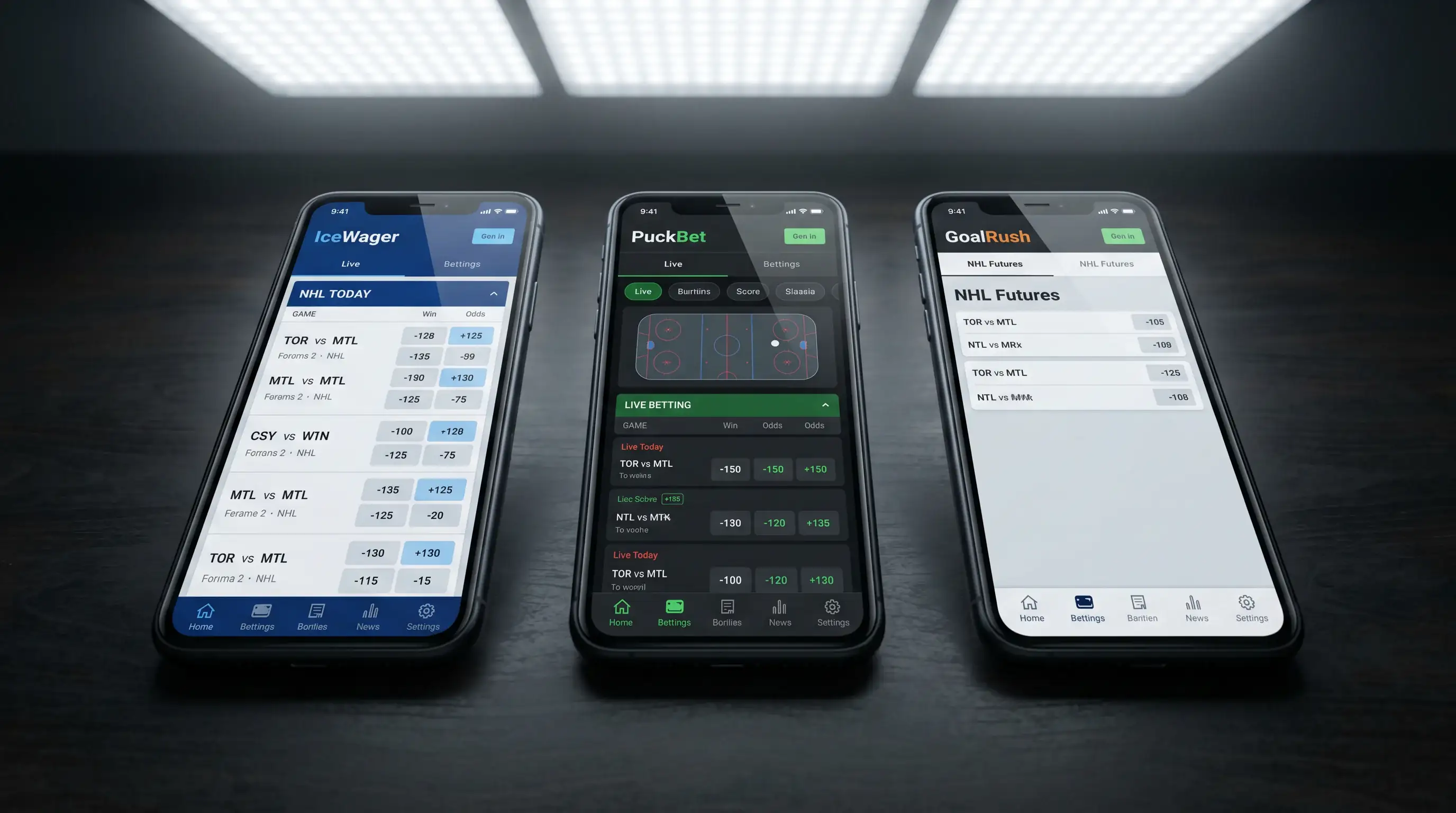
Niche and data-driven platforms present a different proposition. These operators often emerged from the US sports betting expansion and have built their product around American sports, including the NHL. Their market depth on hockey tends to be superior, with 50 to 100+ markets per game as standard. The trade-off can be a less polished mobile experience or fewer payment options tailored to the UK market. For a bettor who prioritises market range and competitive margins over brand familiarity, these platforms are worth investigating.
Exchange-style platforms round out the landscape. Instead of betting against the bookmaker, you bet against other punters, and the operator takes a commission on winning bets. Exchanges typically offer the tightest effective margins because the price is set by market participants rather than a trading desk. NHL liquidity on exchanges can be thin outside marquee games, so you may struggle to get matched on lower-profile fixtures. But for Stanley Cup Playoffs or high-profile regular-season matchups, exchange prices can be meaningfully better than any fixed-odds operator.
A fourth category worth mentioning is the US-origin operator that has expanded to the UK market. These platforms were built around American sports from day one, and their NHL product often reflects that heritage — deeper prop markets, more granular player statistics embedded in the interface and odds that respond faster to goalie news. The downside can be less familiarity with UK payment norms or a customer support team oriented towards US time zones. Still, if NHL is your primary focus, testing at least one of these platforms alongside a traditional UK generalist gives you a useful point of comparison.
My approach: I maintain accounts with at least one operator from each category. The generalist handles my quick in-play bets. The niche platform gives me the deepest prop markets. The exchange gives me the best price when liquidity is available. None of them is perfect for everything, and that is exactly why diversification matters.
NHL Market Range: What to Look For Beyond Moneyline
When I first started betting on hockey from the UK, I thought the moneyline was the only game in town. It took an embarrassingly long time to discover the depth of markets that good operators offer — and how much more precisely those markets let you express an analytical view.
The puck line is the NHL equivalent of a points spread: typically set at -1.5 for the favourite and +1.5 for the underdog. It rewards you for predicting not just who wins but by how much. Totals — the over/under on combined goals — are the second-most traded market and the one where sharp bettors have historically found the most consistent edges. Period-specific markets break the game into three segments, letting you bet on first-period moneylines, totals or both. These are particularly useful if your analysis centres on how teams start games versus how they finish.
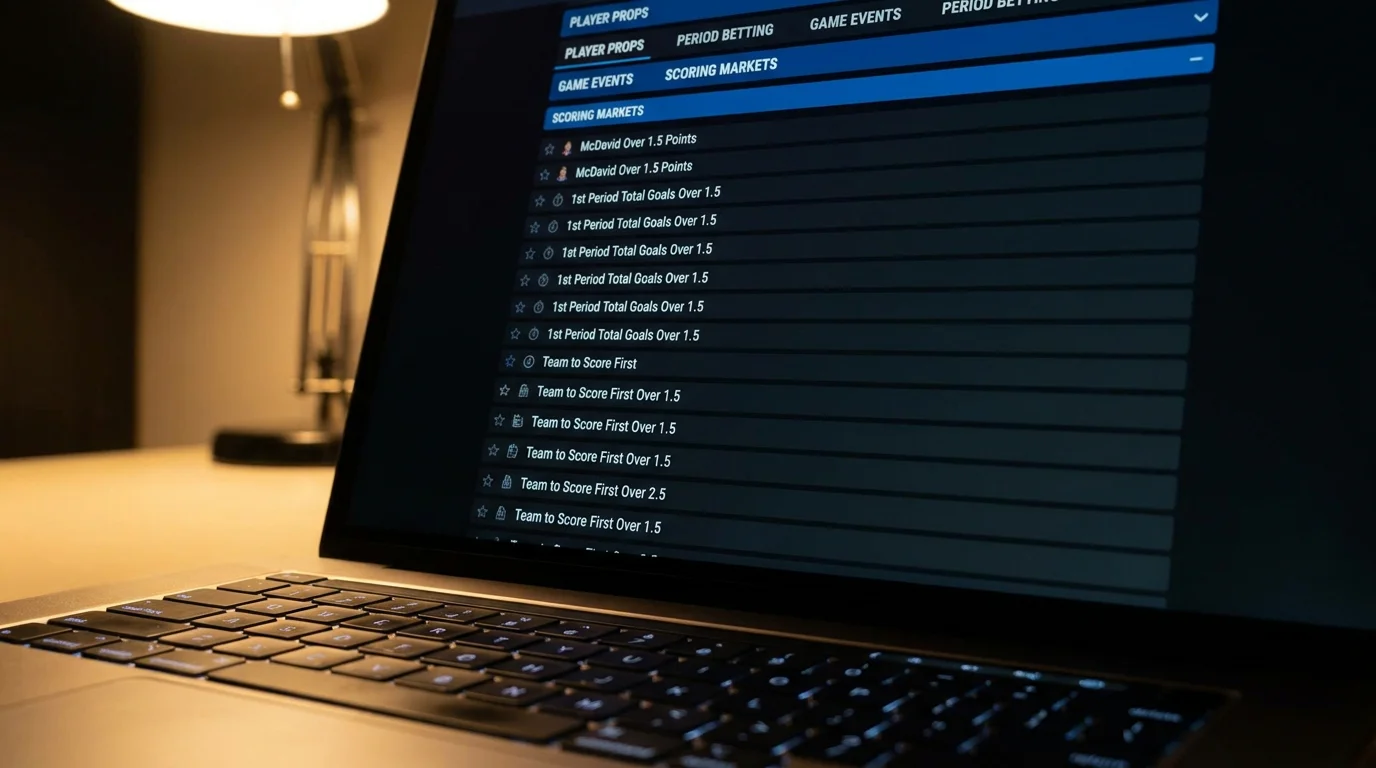
Player props open an entirely different dimension. Goals scored, assists, shots on goal, saves for the goaltender — each category is a standalone market. The beauty of props is that they are priced off individual performance models, which are inherently noisier than team-level models. That noise creates mispricing, and mispricing is where profit lives. Same-game parlays combine multiple selections from a single fixture into one bet with compounded odds. They carry higher margins than individual markets, but they also allow you to construct specific scenarios — a team wins, the total goes under, and a particular player records a point — that no single market can capture.
Live betting deserves a mention here because of its sheer scale. In-play wagering accounts for over 62% of the entire online sports betting market, and NHL’s stop-start rhythm — with natural breaks between periods — makes it particularly well suited to in-play markets. An operator that offers robust live moneylines, running totals and next-goal markets with minimal lag gives you a significant tactical advantage over one that freezes its in-play offering every time the puck crosses the blue line.
When evaluating any bookmaker for NHL, open a game that is currently live or about to start and count the markets. If the number is below 30, you are working with limited tools. If it is above 60, you have room to manoeuvre.
Betting on NHL from Your Phone: App Quality and Speed
Online platforms handle roughly 75% of the entire sports betting market, and the phone in your pocket is how most of that volume flows. For NHL betting from the UK, where games start late in the evening and you are often placing bets from the sofa after dinner, mobile experience is not a luxury — it is the primary interface.
Speed matters more than aesthetics. An app that takes four seconds to load the NHL section and another three to populate the odds is costing you money in live markets where lines shift within moments of a goal or a penalty. I have timed the load speed of several UK bookmaker apps on the same device and the variation is significant — the fastest populate an NHL game’s full market list in under two seconds, while the slowest take eight or more. When you are trying to place an in-play bet during an intermission window that lasts only twenty minutes, those seconds add up.

Navigation is the second factor. Can you find NHL without scrolling past twelve other sports? Is the search function reliable enough to jump straight to a specific fixture? Are the bet slip mechanics intuitive — one tap to add, one tap to confirm? Small friction points that barely register on a football bet become real obstacles when you are scanning a ten-game NHL card and want to compare lines quickly.
Push notifications round out the mobile picture. The best NHL betting apps let you set alerts for goalie confirmations, line movements and game starts. Given that UK bettors are typically placing NHL wagers between 22:00 and 03:00 GMT, a well-timed notification can be the difference between catching a favourable line and missing it entirely. If your current operator’s app does not offer custom alerts for hockey, it is worth testing one that does.
UKGC Licensing and Operator Accountability
I never bet with an unlicensed operator, and neither should you. That is not a throwaway line — it is the single most important safety decision in your entire betting setup. The UK Gambling Commission exists to ensure operators play fair, protect customer funds and intervene when things go wrong. Betting outside that framework means surrendering every protection you have.
The scale of UKGC enforcement has grown dramatically. In the most recent reporting cycle, the Commission directed more than 102,000 URLs to Google for removal — with 64,000 successfully taken down — and shut 264 illegal gambling sites. That represents a tenfold increase in enforcement activity compared to the prior year. The message is clear: unlicensed operators are being hunted aggressively, and the regulatory net is tightening.
For licensed operators, accountability has sharpened too. In October 2025, the UKGC introduced an updated financial penalty framework replacing what had been a less transparent system. Operators now face clearer, more predictable sanctions for compliance failures — from inadequate customer protections to misleading promotional terms. Andrew Rhodes, the Commission’s Chief Executive, has been blunt about operators misrepresenting regulatory requirements to customers, making clear that blaming affordability checks for unrelated technical issues is unacceptable and needs to stop.
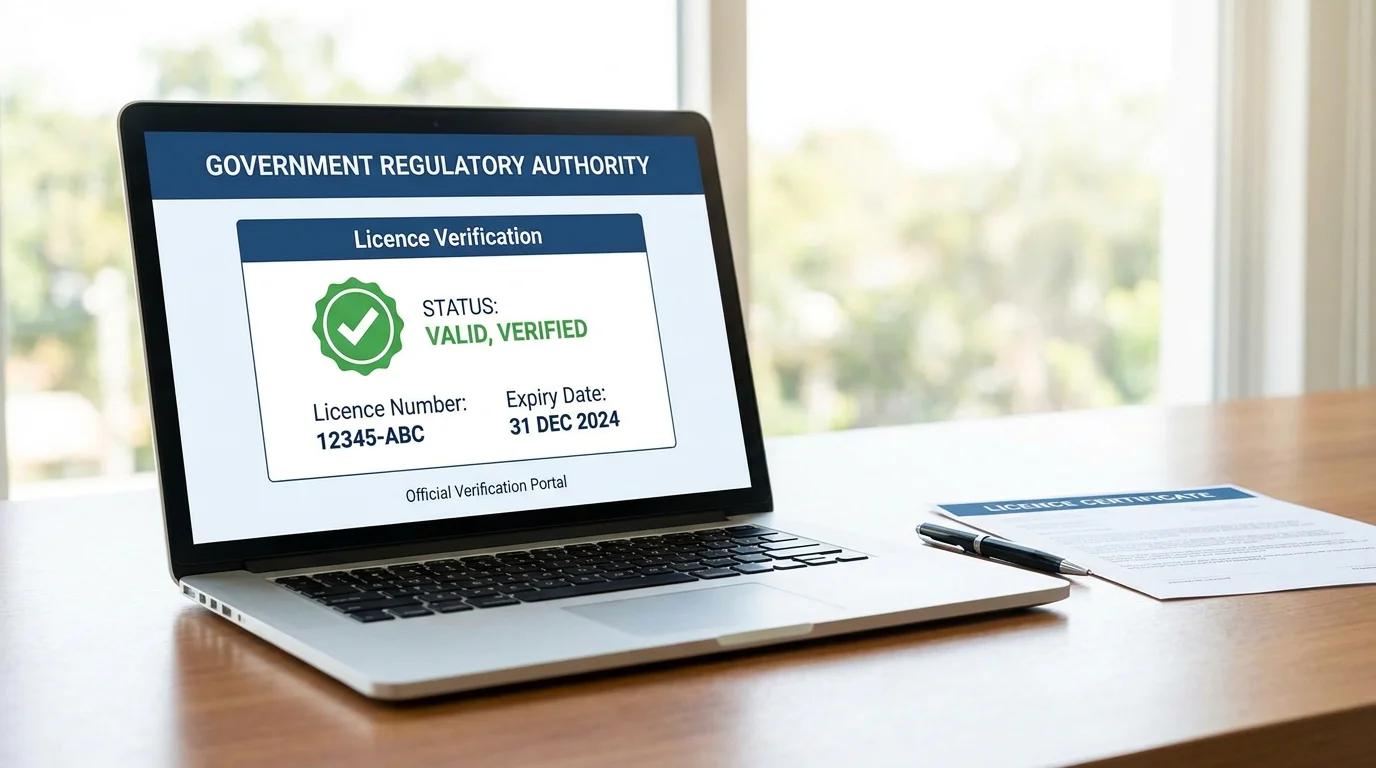
What this means for you as an NHL bettor: always verify that the operator you are using holds a current UKGC licence. The Commission maintains a public register on its website where you can search any operator by name. If it is not on the register, close the tab. If it is on the register, you benefit from mandatory protections including segregated customer funds, dispute resolution through an independent adjudicator and the right to self-exclude across all licensed platforms through GamStop. Before chasing any promotional offer — and for a practical look at how NHL free bets actually work — the free bets guide walks through the terms you should check before committing.
Deposits, Withdrawals and Payment Methods
The UK online gambling market is worth between $8.28 and $9.0 billion, and that enormous volume flows through a payment infrastructure that most punters take for granted — until something goes wrong. Getting money into and out of your betting account should be seamless, and for NHL bettors who may be placing wagers late at night, any friction in the payment process is amplified.
Debit cards remain the most common deposit method across UK bookmakers, and Visa or Mastercard transactions typically process instantly. Credit card gambling was banned by the UKGC in April 2020, so if an operator accepts credit cards, that is an immediate red flag for licensing compliance. E-wallets offer an alternative layer of convenience and can speed up withdrawal times, sometimes processing payouts within hours rather than the one-to-three business days typical of card withdrawals. Bank transfers are available almost everywhere but tend to be the slowest option.
Withdrawal speed is where operators differentiate themselves most clearly. I have experienced everything from same-day payouts to five-day waits on identical amounts. My advice: test a small withdrawal on any new platform before committing serious money. The speed and smoothness of that first cashout tells you more about the operator’s infrastructure than any marketing promise.
One practical consideration for NHL bettors: if you maintain accounts with multiple operators for line shopping, you need a manageable system for tracking balances. I use a simple spreadsheet updated weekly — deposit amounts, current balance, pending withdrawals. It takes five minutes and prevents the common trap of having dead money sitting in an account you forgot about. Your bankroll is only useful if it is liquid and accessible, not scattered across platforms with no oversight.
NHL Betting Sites UK FAQ
Which UK bookmaker has the lowest margins on NHL moneylines?
Margins fluctuate between operators and across fixtures. The most reliable way to identify the tightest prices is to calculate the overround on several games per week across at least three bookmakers. Operators with dedicated American sports trading desks tend to offer consistently lower margins on NHL than generalist platforms. Odds comparison tools can speed up the process by displaying prices side by side.
Do all UKGC-licensed bookmakers offer NHL markets?
Not all. While most major operators list NHL moneylines and totals, smaller or football-focused bookmakers sometimes omit hockey entirely. Of those that do offer NHL, market depth varies enormously — some provide 80 or more markets per game including props and same-game parlays, while others offer only the moneyline and a basic total. Check the ice hockey section before opening an account if NHL is your primary interest.
Can I use the same account for NHL and Premier League betting?
Yes. Any UKGC-licensed bookmaker that covers both sports allows you to bet on NHL and football from the same account and wallet. There is no need for separate registrations. Balances, deposits and withdrawals are shared across all sports within a single operator.
Are welcome offers available for NHL-specific bets?
Welcome offers are typically sport-agnostic — they apply to any market that meets the minimum odds and bet type requirements stated in the terms. You can almost always use a free bet or deposit match on an NHL moneyline or totals bet, but always verify the specific terms and conditions. Some promotions exclude certain bet types like system bets or player props.
Published by the NHL Hockey Bets team.