
NHL Goalie Betting: How Goaltending Swings Lines and Outcomes
 Available in US
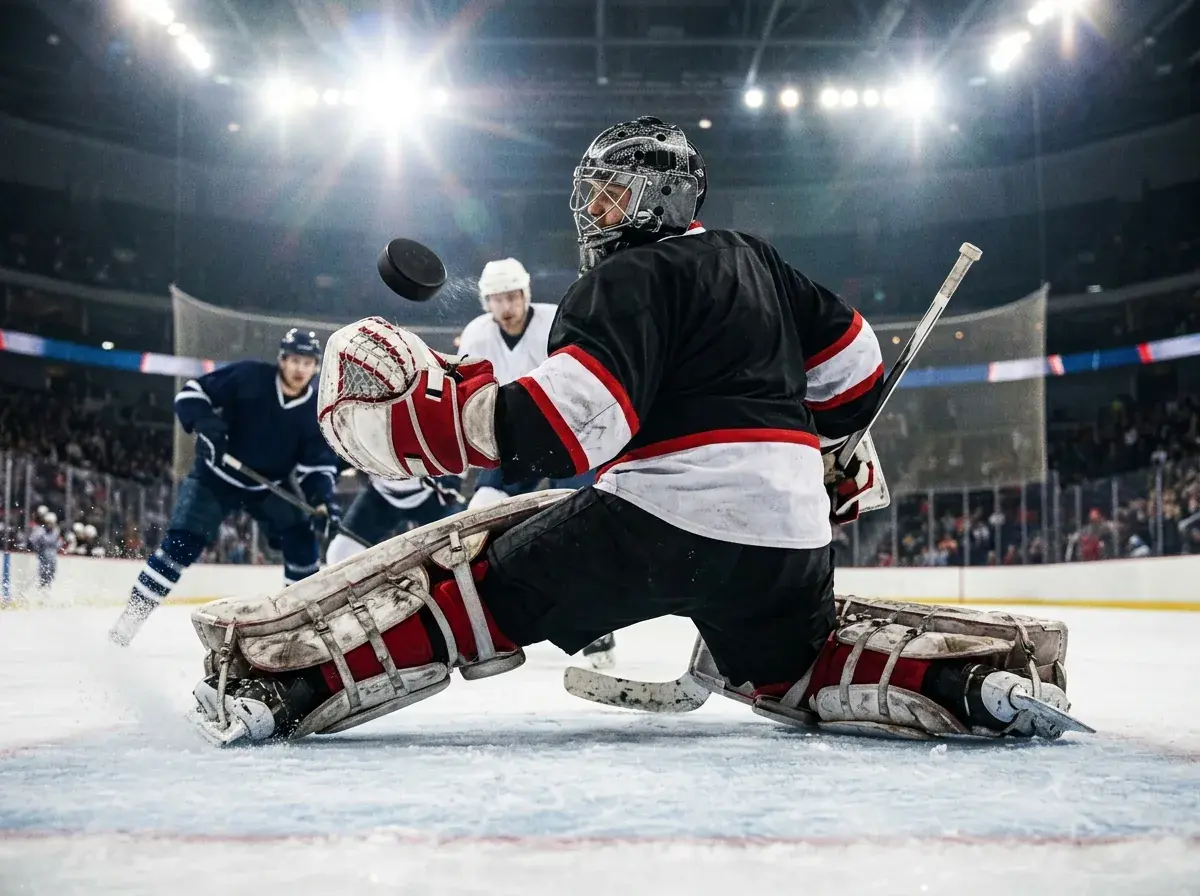
The Single Biggest Variable in Any NHL Bet
I once placed a moneyline bet on a team that had won six straight, was playing at home, and faced a bottom-ten opponent. I felt bulletproof. Then, thirty minutes before puck drop, the team announced its backup goaltender. The line moved 20 cents against me, and the team lost 4-1. That night taught me a rule I have not broken since: goaltending is the single biggest factor in any NHL bet — confirm the starter before you wager, as Marcus Chen put it in his analysis for Tech Insider.
No other major team sport concentrates so much outcome variance in a single position. A starting goaltender faces every shot, controls every rebound, and sets the tone for the entire defence. The gap between a team’s number-one goalie and their backup is not a marginal difference — it can be the equivalent of conceding an extra goal per game, which in a league where the average total hovers around six goals is a seismic shift.
Starter vs Backup: Measuring the Line Shift
When a starting goaltender is confirmed, the moneyline usually holds steady or tightens slightly toward the expected favourite. When the backup gets the call, the line lurches. I track these movements regularly, and a swing of 10 to 20 cents in decimal odds is standard. A team priced at 1.65 with their starter can drift to 1.85 or even 1.95 with the backup, which reprices the implied probability from about 61% down to around 51%. That is a near-elimination of the team’s perceived advantage.
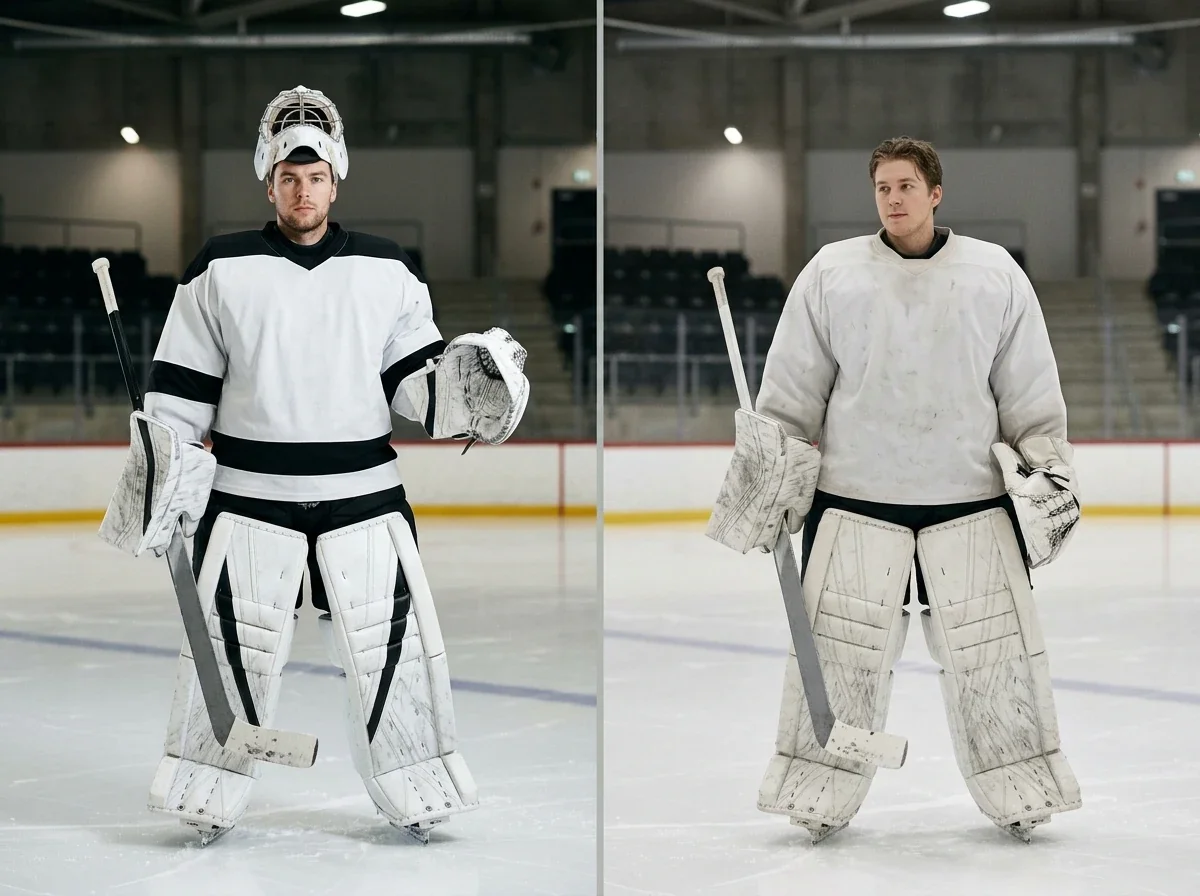
The magnitude of the shift depends on the quality gap. Some teams carry a backup who is a borderline starter elsewhere, and the line barely flinches — maybe five cents. Others rely on a backup with a career save percentage below .900, and the market adjusts aggressively. The key metric to watch is save percentage differential between starter and backup over the current season. A gap larger than .015 (for example, .920 vs .905) typically produces a line movement you can anticipate and exploit.
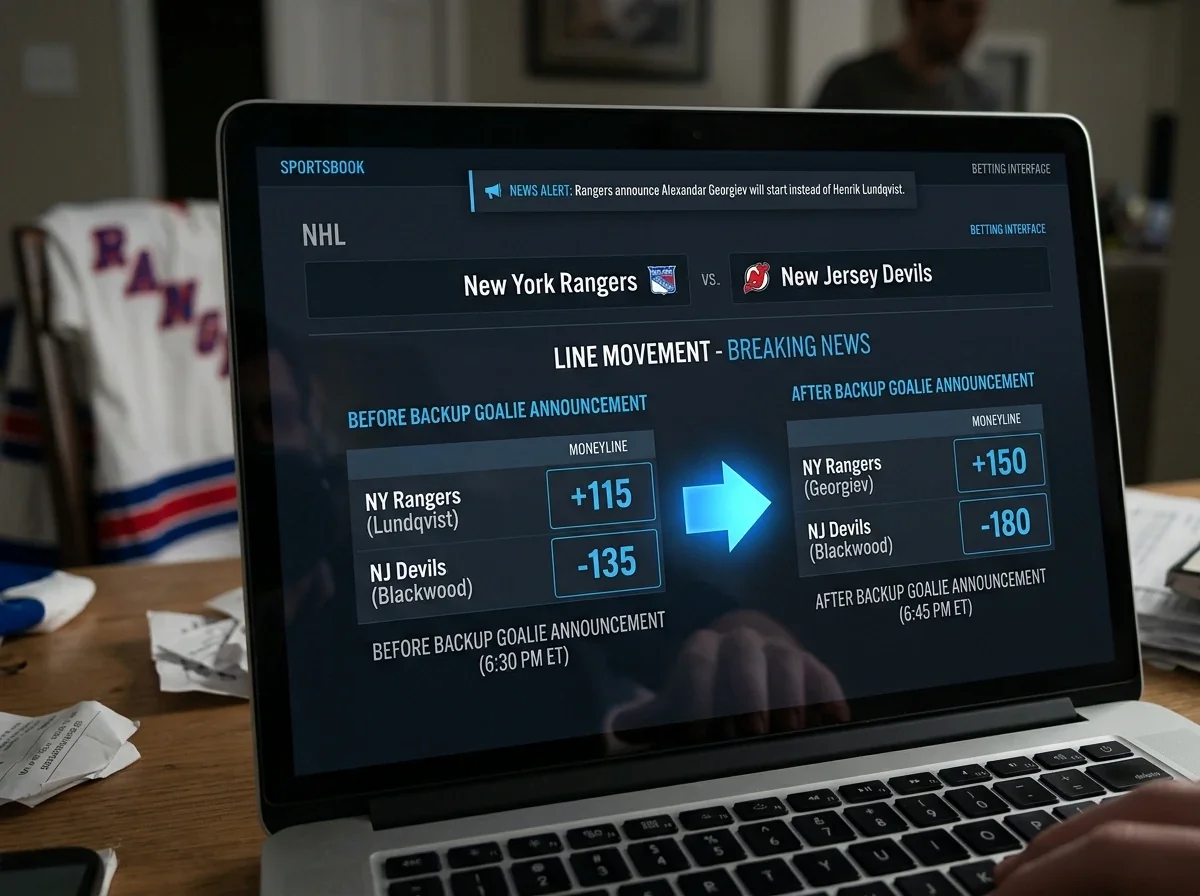
Here is where it gets practical. If you believe a team wins regardless of who is in net — perhaps because their offence is elite and the opponent is terrible — you can wait for the backup announcement, watch the price drift to 1.85, and take a line that overreacts to the goalie change. This only works when you have independently assessed that the team’s skater advantage outweighs the goaltending downgrade. Blindly buying the dip on backup starts is not a strategy; it is a hope dressed as a plan.
Where and When to Confirm the Starting Goalie
Goalie confirmations follow a loose daily rhythm. Most NHL teams hold a morning skate or media availability between 10 AM and noon Eastern Time, which translates to 3 PM to 5 PM in the UK during GMT and 4 PM to 6 PM during BST. The starting goaltender is typically confirmed during these sessions, either through a direct quote from the coach or through lineup projections published by team reporters.
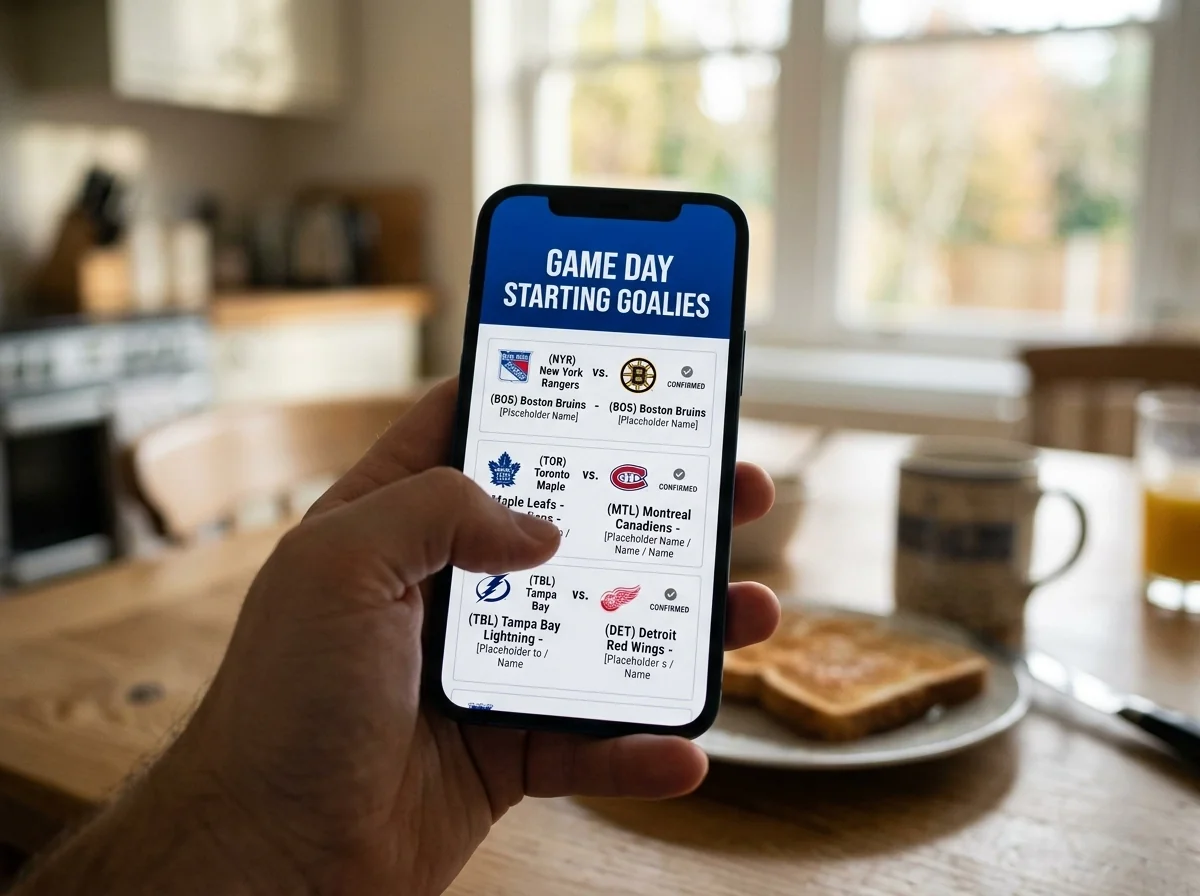
DailyFaceoff is the most widely used aggregation source. Their starting goalie page compiles beat-reporter confirmations, team announcements, and historical patterns into a single dashboard that updates throughout the day. The official NHL app and individual team social media accounts are secondary sources, but they sometimes lag behind the beat reporters by an hour or more.

Not every confirmation arrives on schedule. Back-to-back situations, where a team plays two consecutive nights, produce the most uncertainty. Coaches often keep the goalie decision private until the last possible moment, forcing bettors to wait. My process for these situations is rigid: I set a price target based on both possible starters, note the goalie confirmation window, and only place the bet once the decision is public. If confirmation arrives too late for the odds I want, I skip the game. Discipline beats FOMO every time.
The pre-bet checklist I use starts and ends with goaltending. It is the first box to tick and the last to verify before confirming any NHL wager.
Goalie-Specific Props: Saves, Shutouts and Win Markets
Beyond their influence on main markets, goaltenders have their own prop ecosystem. Saves over/under is the deepest goalie prop, and it ties directly to the opposing team’s shot volume. A goalie facing a team that generates 34 shots per game will have a saves line around 29.5 or 30.5, while a goalie facing a low-volume team might see a line of 24.5. The logic is straightforward: more shots mean more saves, assuming the goalie is not pulled early.
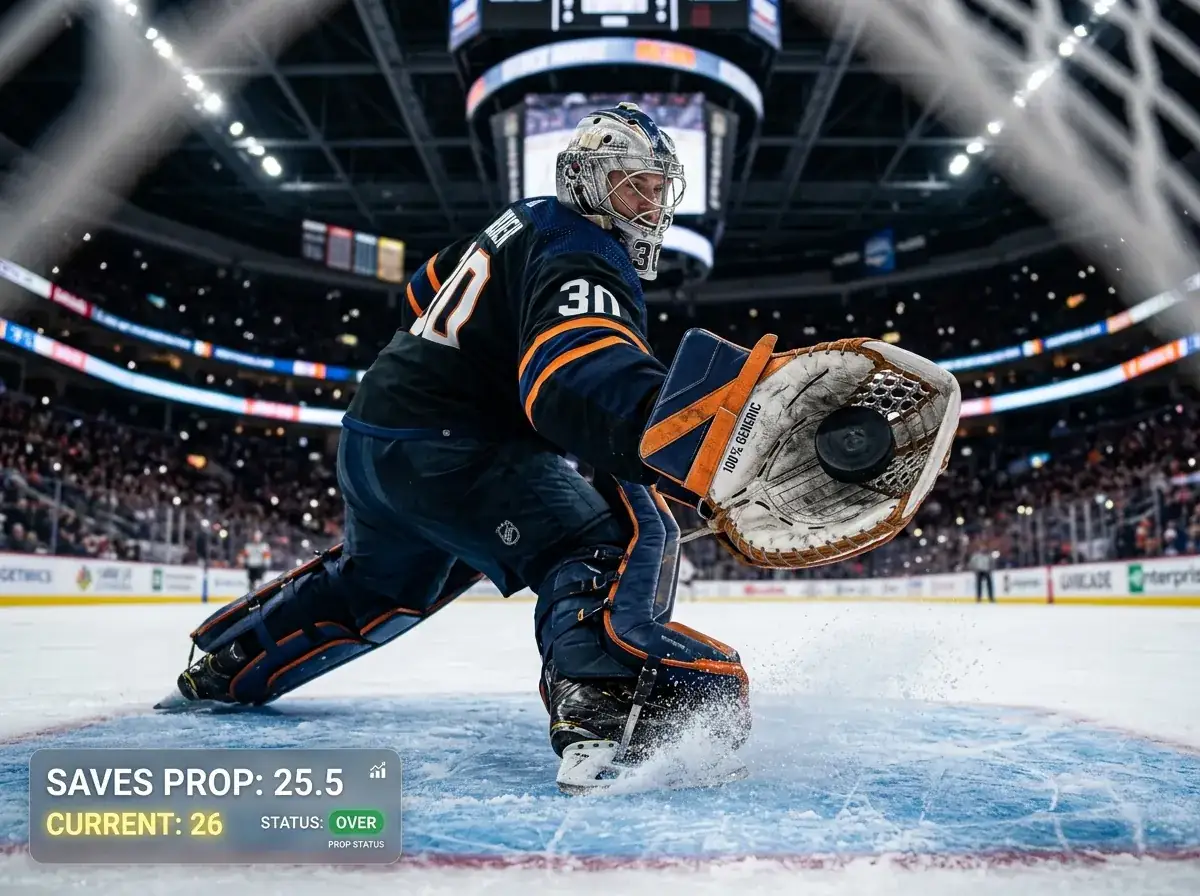
In the 2025/26 season, roughly 30% of games have gone to overtime, which means goaltenders are spending more time on the ice and facing more rubber. That elevated overtime rate pushes save totals slightly higher than historical norms, and bookmakers who set lines based on three-year averages rather than current-season data leave a gap you can step into.
Shutout props are the high-risk, high-reward end of goalie betting. The odds are typically 8.00 to 12.00 because shutouts are rare — most seasons produce them in fewer than 10% of games. I treat shutout bets as occasional plays when conditions align: an elite goaltender, a weak opposing offence, and a back-to-back situation for the other team that compresses their offensive output. Even then, I keep the stake small relative to my unit size.
Goalie win markets ask simply whether the named goaltender earns the win, defined as being the goalie of record when the winning goal is scored. This is essentially a team moneyline bet filtered through the goaltender, and the pricing reflects the team’s overall win probability rather than anything goalie-specific. I find less standalone value here than in saves props, but goalie win selections can serve as a leg in a same-game parlay when you want to anchor the bet to a specific starter.
How do goalie changes affect NHL betting lines?
A switch from the expected starting goaltender to the backup typically moves the moneyline by 10 to 20 cents in decimal odds, sometimes more if the quality gap is large. The totals line may also adjust upward, reflecting the expectation that a weaker goaltender concedes more goals. Lines move fastest in the 30 to 60 minutes after a goalie announcement, so bettors who act quickly can capture value before the market fully adjusts.
Where can I check the confirmed NHL starting goalie before a match?
DailyFaceoff is the most comprehensive source, aggregating beat-reporter confirmations and team announcements into a single page. The official NHL app, team Twitter accounts, and local beat reporters also publish confirmations, usually between 3 PM and 6 PM UK time on game days. On back-to-back nights, confirmations may arrive later, sometimes within an hour of puck drop.
Written by the editors at NHL Hockey Bets.