
NHL Betting Guide 2026
NHL Hockey Bets UK: The Data-Driven Guide for 2026
By NHL Betting Analyst
 Available in US
Table of Contents
- Why NHL Hockey Bets Are Gaining Ground in the UK
- The Numbers That Shape Every NHL Bet from the UK
- NHL in 2026: Revenue, Ratings and Record Attendance
- Core Bet Types at a Glance: Moneyline, Puck Line and Totals
- Choosing a UK Bookmaker for NHL Markets
- Foundations of a Profitable NHL Betting Approach
- NHL Edge Finder
- In-Play NHL Betting: Timing the Ice
- Betting on NHL from the UK: Time Zones, Streaming and Regulations
- Responsible Gambling Tools for NHL Bettors
- Frequently Asked Questions About NHL Betting in the UK
Why NHL Hockey Bets Are Gaining Ground in the UK
Ten years ago, when I started breaking down ice hockey markets from a flat in East London, mentioning “NHL bets” to a fellow punter earned you a blank stare. Football was king. Cricket had its niche. Even darts got more respect at the bookmaker counter. Fast forward to 2026, and I get weekly messages from readers asking which goaltender to back on a Tuesday night. Something shifted – and the numbers prove it.
The NHL is no longer a fringe curiosity for UK bettors. It is a league generating record revenue north of $7 billion, pulling over 23 million fans through arena gates for the third consecutive attendance record, and offering one of the highest underdog win rates in professional sport at 39.1%. That last figure alone should make any serious punter sit up. In football, underdogs win roughly a quarter of the time. In ice hockey, they win nearly two in every five games. The parity baked into the NHL’s salary cap system creates a betting landscape where knowledge – not blind loyalty – pays off.
For UK punters specifically, NHL betting occupies a sweet spot. The markets are deep enough to find genuine value but underserved enough that bookmaker pricing still carries inefficiencies you would never find in a Premier League match. The odds are set primarily for the North American market, and UK-specific angles – time zone arbitrage on late-night lines, for instance – remain almost entirely unexploited. I have spent a decade mapping these edges, and this guide is the distillation of that work.

What follows is not a list of bookmaker promotions or a surface-level explainer you have read a dozen times elsewhere. This is a data-driven walkthrough of how NHL betting actually works for someone based in the UK: the bet types, the strategy foundations, the regulatory framework, and the live-betting dynamics that make ice hockey one of the most rewarding sports to wager on. Every claim is anchored to a statistic. Every recommendation comes from real-market experience.
$7 Billion+
NHL league revenue in the 2023/24 season – a new all-time high that signals sustained commercial momentum
23 Million+
Total arena attendance in 2024/25, the third consecutive record, at 96.9% capacity across 1,312 regular-season games
39.1%
Underdog straight-up win rate in the 2024/25 NHL season – second only to MLB among major North American sports
Whether you are placing your first NHL wager or refining a system you have run for years, this guide is built to sharpen your edge. Grab a coffee – most NHL games kick off after 11pm UK time, so you will want to be awake for this.
The Numbers That Shape Every NHL Bet from the UK
- NHL underdogs win 39.1% of games outright – the second-highest upset rate among major North American sports – making underdog strategies structurally viable in a way they are not in football.
- Home underdogs cover the puck line 63.9% of the time; home favourites cover it only 41.8%. The spread market favours taking the points at home.
- Away teams on the second night of a back-to-back win just 40% of games. Schedule fatigue is a measurable, exploitable edge.
- UK bookmaker margins on NHL moneylines average 4-6%. Line shopping across two or three UKGC-licensed operators compounds small differences into significant returns over a season.
- Confirm the starting goaltender before every wager. No other single variable moves NHL lines as reliably as a change between the pipes.
NHL in 2026: Revenue, Ratings and Record Attendance
I remember watching a half-empty arena stream from Sunrise, Florida in 2017, thinking the Panthers might fold within a decade. Nine years later, the combined value of all 32 NHL franchises exceeds $67 billion, with an average club worth roughly $2.2 billion. That trajectory is not just a sports story – it is the financial foundation that keeps betting markets liquid, odds competitive, and bookmaker coverage expanding.
The league’s revenue hit a record $7 billion in 2023/24, and projections for the current cycle point toward $8 billion. Commissioner Gary Bettman has described the outlook as “very positive,” noting that “the marketplace will ultimately determine what the true value is” – but every financial indicator says the marketplace has already decided. Average club revenue rose 9% year-on-year to $243 million in 2024/25, while average EBITDA surged 20% to $54 million. Profitability is outpacing growth, which means franchises are spending more efficiently, not just earning more.
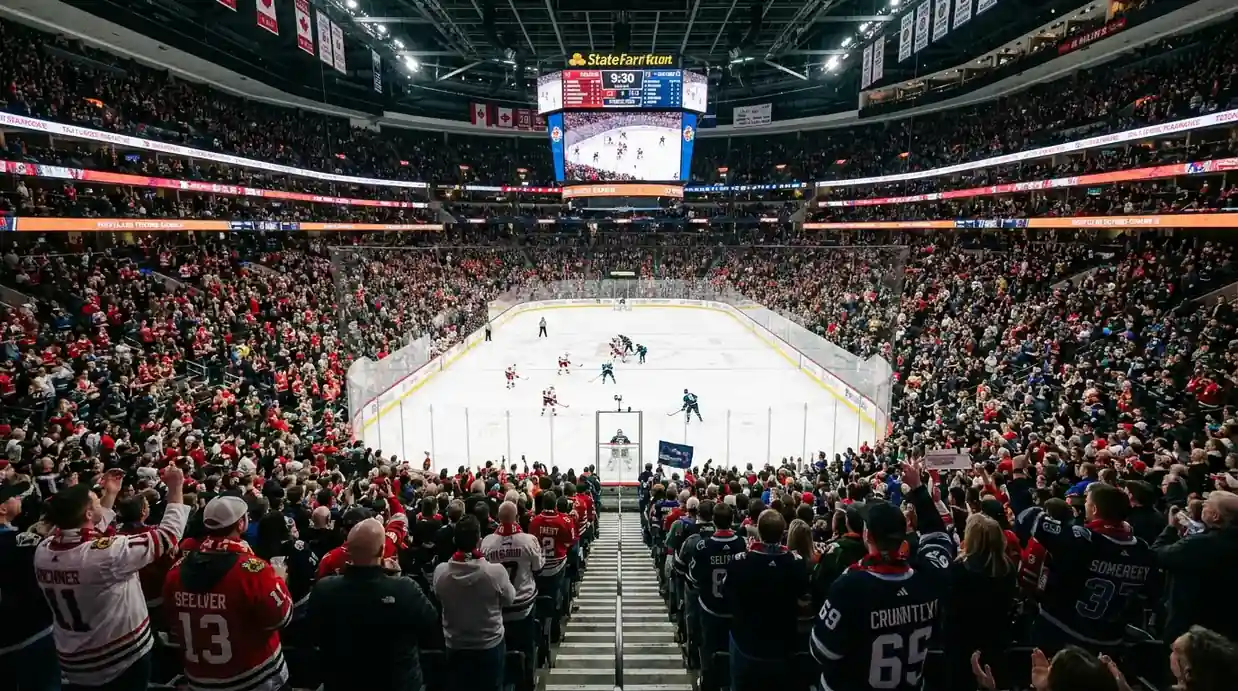
For bettors, these numbers matter because a financially healthy league invests in broadcast deals, which drives viewership, which drives betting volume, which drives tighter odds. The chain is direct. NHL media rights in the US currently sit at approximately $4.5 billion across ESPN and TNT over seven years. In Canada, Rogers signed a blockbuster 12-year deal worth CA$11 billion starting from the 2026/27 season. When that kind of money flows into a sport, bookmakers respond by deepening their market offerings.
In Q1 2025, NHL platforms logged 1.2 billion streaming minutes – surpassing the NFL’s 1.1 billion for the same period, though still trailing the NBA’s 1.9 billion. The digital audience is growing faster than almost anyone expected.
Viewership tells an equally compelling story. The 4 Nations Face-Off final between the USA and Canada drew 9.3 million viewers on ESPN – the largest hockey audience in the network’s history, peaking at 10.4 million. Playoff ratings for 2026 have followed suit: first-round games averaged 1.8 million viewers, a 68% jump from 2025, and second-round numbers hit 1.9 million, a 55% increase that set a league record. S&P Global’s analysts summed it up neatly: the 2024/25 season achieved record attendance with over 23 million fans, highlighting a fan demographic that closely aligns with the broader US population. That demographic breadth is what attracts bookmakers – it means the betting pool is large and diverse, not a narrow slice of hardcore fans.

Media rights context: The NHL’s US broadcast deal with ESPN and TNT is worth approximately $4.5 billion over seven years. Rogers’ new Canadian deal adds CA$11 billion over 12 years from 2026/27. These contracts guarantee extensive live coverage, which directly benefits UK punters who rely on streaming access to inform in-play wagers. Understanding where NHL betting odds come from starts with understanding the money behind the broadcast.
The 2024/25 season also set an attendance record of 23,014,458 fans across 1,312 regular-season games – a 96.9% capacity fill rate and the third consecutive season of record crowds. Add the 94,751 spectators who packed the Stadium Series outdoor game in Columbus, and you start to see a sport that is not just surviving – it is surging. For UK bettors, that surge translates into more televised games, more data, more markets, and more opportunities to find edges the casual punter overlooks.
Core Bet Types at a Glance: Moneyline, Puck Line and Totals
The first NHL bet I ever placed was a moneyline on the Chicago Blackhawks in 2016. I had no idea what a puck line was, confused “totals” with total goals in a tournament, and staked far too much on a hunch. I won – which was the worst thing that could have happened, because it taught me nothing. Learning the three core bet types properly took another six months and cost me more than I care to admit. Here is the shortcut I wish I had.
Moneyline – the simplest NHL wager. You pick which team wins the game outright, including overtime and shootouts. No spread, no goal total – just the winner. In UK bookmaker interfaces, this usually appears as “Match Result” or “To Win Match.”
Moneyline betting rewards an understanding of team quality and context. NHL underdogs win 39.1% of games outright, which means backing favourites blindly is a losing proposition over a full season. The odds on a heavy favourite might sit at 1.45 in decimal format, offering thin margins for a sport where any team can beat any other on a given night. Moneyline becomes most interesting when you identify situations where the implied probability embedded in the odds underestimates the underdog – something that happens more often in the NHL than in almost any other major league.

Puck line – the NHL’s version of a point spread. The standard line is set at 1.5 goals. Backing a favourite at -1.5 means they must win by two or more goals. Backing an underdog at +1.5 means they can lose by a single goal and your bet still lands.
The puck line is where data sharpens the edge. Home underdogs cover the puck line – meaning they either win outright or lose by just one goal – in 63.9% of cases. Flip it around: home favourites cover -1.5 only 41.8% of the time. That asymmetry is enormous. It tells you that betting on favourites to win by two or more at home is historically a losing play, while taking the underdog spread at home is one of the most consistent edges in NHL betting. I dedicate an entire breakdown of every NHL bet type to showing how each market behaves across different situations, but the puck line’s skew is the single number I would want every UK punter to memorise.
Totals (over/under) – a bet on the combined number of goals scored by both teams. The bookmaker sets a line – typically 6.5 in the NHL – and you wager on whether the actual total falls over or under that number.
Totals in the NHL cluster tightly. The most common closing total is 6.5, and games generally produce between five and seven goals. Unders hit at a marginally higher rate – roughly 51.2% of the time across recent seasons – which gives a slight statistical lean toward the under in neutral situations. But “neutral” rarely describes a real NHL game. Goaltending matchups, back-to-back schedule fatigue, and power play efficiency all push the total in one direction or another, and understanding those factors is what separates an informed totals bet from a coin flip.
Puck line payout example
Suppose a match has the home side as underdog at +1.5 goals, priced at decimal odds of 1.55. You stake £20.
If the home side loses 2-3, they lost by only one goal, so +1.5 covers. Your return: £20 x 1.55 = £31.00, for a profit of £11.00.
If they lose 1-4, the margin is three goals – +1.5 does not cover, and the stake is lost.
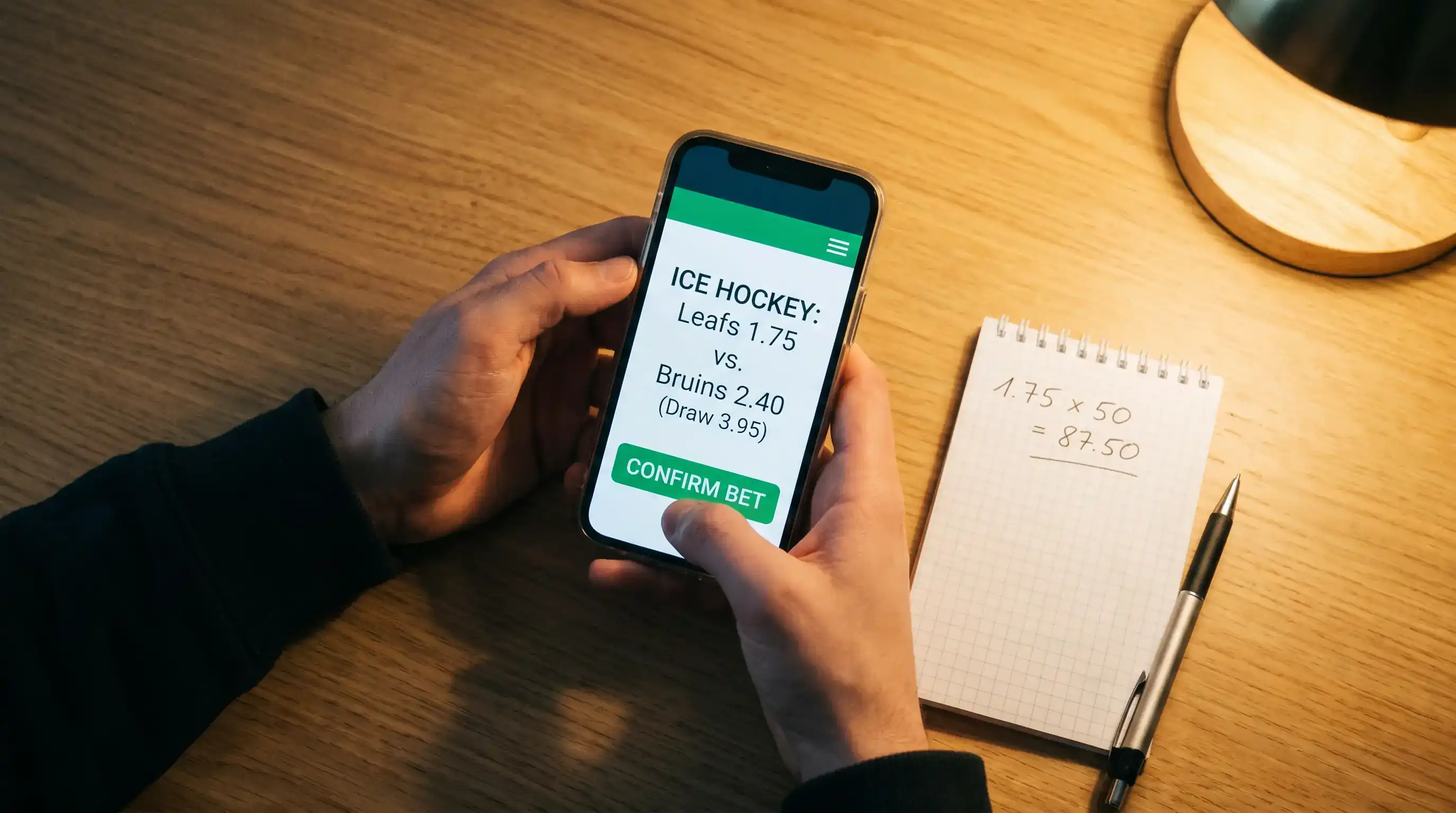
These three markets – moneyline, puck line, totals – form the backbone of NHL wagering. Props, parlays, futures and live bets all build on top of them, and I cover each in dedicated sections of this guide and across the site. Master the core three first. Everything else is an extension.
Choosing a UK Bookmaker for NHL Markets
A few years back, I opened accounts with four different bookmakers on the same evening, placed identical NHL moneyline bets on each, and compared the returns. The difference between the best and worst payout on a single £50 wager was £6.40. Over a season of 200 bets, that gap compounds into hundreds of pounds – and all I had done was type the same selection into four different apps. Choosing where you bet matters as much as choosing what you bet on.
More than 80 online bookmakers hold licences from the UK Gambling Commission, but the number offering meaningful NHL coverage – deep markets beyond basic moneyline, competitive margins, and reliable live-betting feeds – is considerably smaller. The average bookmaker margin on NHL moneylines in the UK sits between 4% and 6%, which is slightly higher than you would pay on a Premier League match but still workable if you are disciplined about line shopping.
UKGC licensing is non-negotiable. The UK Gambling Commission has escalated enforcement dramatically: over 102,000 URLs have been referred to Google for removal, with 264 illegal sites shut down – a tenfold increase compared to 2023/24. Betting with an unlicensed operator means no dispute resolution, no deposit protection, and no recourse if something goes wrong. Every bookmaker you use for NHL markets should carry an active UKGC licence. No exceptions.
When I evaluate a bookmaker for NHL betting, I look beyond the welcome offer. The criteria that actually affect long-term profitability are specific and measurable, and they rarely appear in the glossy comparison tables you find on affiliate sites. Here is what I prioritise:
| Criterion | What to look for | Why it matters for NHL |
|---|---|---|
| Moneyline margin | Below 5% on standard NHL games | Lower margin = higher returns over hundreds of bets |
| Market depth | Puck line, totals, period betting, player props, same-game parlays | NHL-specific markets are where edges hide; basic moneyline alone limits your options |
| Live betting speed | Odds update within seconds of a goal or penalty | NHL is fast – a sluggish in-play feed means stale prices and missed opportunities |
| Streaming access | Live NHL coverage included with a funded account | Watching the game while betting live is a material advantage, not a luxury |
| Cash-out flexibility | Partial and full cash-out available on NHL pre-match and in-play | NHL games swing on a single power-play goal; the ability to lock in profit mid-game is essential |

I have published a detailed ranking of NHL betting sites in the UK based on these exact criteria, with margin data and market-depth comparisons for each operator. The short version: no single bookmaker wins on every metric. The most competitive margins are often found at operators with thinner NHL market ranges, while the deepest prop coverage sometimes comes with wider overrounds. Running two or three accounts – all UKGC-licensed – is the practical solution, and it is how I have operated for years.
One last note on bookmaker selection: pay attention to how an operator handles NHL-specific settlement rules. Overtime and shootout conventions vary between platforms, and a misunderstanding about whether your puck line bet includes overtime can turn a winner into a loser. Read the small print once. It saves arguments later.
Foundations of a Profitable NHL Betting Approach
Early in my career covering NHL markets, I backed a heavy favourite – the team had won six straight, their star forward was on a tear, and the odds seemed generous. What I did not check was that their starting goaltender had been pulled to the bench for the night, replaced by a backup with a save percentage twenty points lower. The bet lost 5-2. It was a £100 lesson in the most important rule of NHL betting: goaltending is the single biggest factor in any NHL bet – confirm the starter before you wager. That principle, borrowed from Marcus Chen’s reporting on NHL betting strategy, has saved me more money than any statistical model.
NHL betting rewards patience and process more than star-gazing – goalies swing outcomes, totals cluster tightly, and the long season produces fatigue spots you can exploit. That observation, which I first encountered in a Tech Insider analysis and have validated across thousands of my own bets, captures the philosophy behind every strategy I use. The NHL is not a sport where the best team always wins. It is a sport where the most prepared bettor consistently finds value.
Three pillars underpin my approach. First, schedule awareness. Teams playing the second leg of a back-to-back road trip have won just 40% of those games since the 2023 season – a 205-309 straight-up record. That is a significant and persistent edge, particularly when the market does not fully price in the fatigue factor. If a team flew from Vancouver to Florida overnight and is playing its second game in two days, the moneyline does not always reflect the disadvantage accurately.

Second, home-ice context. Home favourites win 64.1% of their games, which sounds dominant until you realise they cover the puck line only 41.8% of the time. Meanwhile, home underdogs cover the spread in 63.9% of cases. The takeaway: home ice is real but overpriced when it comes to winning margins. Backing home underdogs on the puck line has been one of the most reliable angles in recent seasons.
Third, underdog discipline. With a 39.1% outright win rate, NHL underdogs offer structural value that most other sports do not. The trick is not to back every underdog blindly but to identify the situations – back-to-back opponents, backup goaltenders, inflated lines on popular teams – where the underdog’s true probability exceeds what the odds imply. I break this down in granular detail in my full NHL betting strategy guide, but the framework starts here.
Edge Finder
NHL Edge Finder
Stack the offered price against PuckEdge’s situational base rates — moneyline, puck line and totals — and see where the market is mispricing the spot.
Pick the situation, enter the decimal odds you’ve been offered on that selection, and compare the market’s implied chance with the historical base rate for that spot.
Base rates are historical situational averages, not a forecast for one game. Always confirm the starting goaltender and check for a back-to-back before staking — no variable moves NHL lines more.
Enter both teams’ moneyline prices to see the bookmaker’s margin and the no-vig “fair” odds — the honest baseline to judge any price against.
Same pick, two bookmakers. Even a small price gap, repeated across a season of winning bets, compounds into real money — usually more than any welcome offer.
Do
- Confirm the starting goaltender before placing any bet – check team announcements or specialist sites roughly 90 minutes before puck drop
- Check whether either team is on the second night of a back-to-back, especially on the road
- Compare odds across at least two bookmakers before committing a stake
- Track your bets in a spreadsheet with odds, stake, and result to measure your actual edge over time
Avoid
- Backing heavy favourites on the puck line at home – the cover rate is below 42%
- Ignoring schedule context: a team’s recent form matters less than its rest and travel situation
- Chasing losses by increasing stake size after a bad night – variance in the NHL is brutal and normal
- Placing bets before goalie confirmation, no matter how confident you feel about the matchup
Pre-bet routine: run through this before every NHL wager
- Starting goaltender confirmed for both teams
- Back-to-back schedule checked – is either side on the second night?
- Injury report reviewed for top-six forwards and top-four defencemen
- Bookmaker margin calculated – is it below 5% on this market?
- Odds compared across at least two licensed operators
- Stake sized according to bankroll plan, not gut feeling

Strategy without discipline is just opinion with extra steps. The checklist above is not decorative – it is the operational backbone of every bet I place, and the single biggest reason my win rate has stayed above breakeven across a decade of NHL wagering.
In-Play NHL Betting: Timing the Ice
The goal horn goes off, the arena erupts, and within three seconds the in-play odds have shifted by fifteen cents on the decimal line. If you blinked, you missed it. NHL live betting operates at a tempo that football punters find disorienting at first – and addictive once they adapt. Around 30% of NHL games this season have been decided in overtime, making the sport one of the most competitive – and volatile – live-betting environments in any league on earth.
That volatility is precisely the opportunity. Live and in-play wagers now account for 62.35% of the online sports betting market globally, and hockey’s natural rhythm – three distinct periods separated by two intermissions, with frequent momentum swings driven by penalties, power plays, and goaltender changes – makes it structurally ideal for in-play betting. Unlike football, where a 1-0 lead in the 70th minute often locks the game down, a one-goal lead in the NHL heading into the third period is anything but safe. Pulled goaltenders, six-on-five attacks, and desperation plays make late comebacks routine rather than remarkable.
The intermission edge: NHL intermissions last roughly 18 minutes, and during that window the in-play markets effectively pause. This is when I do my best work. Coaches make tactical adjustments, line combinations shift, and the emotional temperature of the game resets. The odds posted at the start of the next period often reflect the pre-intermission state of play rather than the adjusted reality. If you can read the tactical shift – a team switching to a more aggressive forecheck, a goaltender swap, a defenceman coming back from the locker room – the intermission window offers mispriced lines that the general market has not caught up with. My dedicated guide to NHL live betting breaks down period-by-period strategies and specific triggers to watch for.
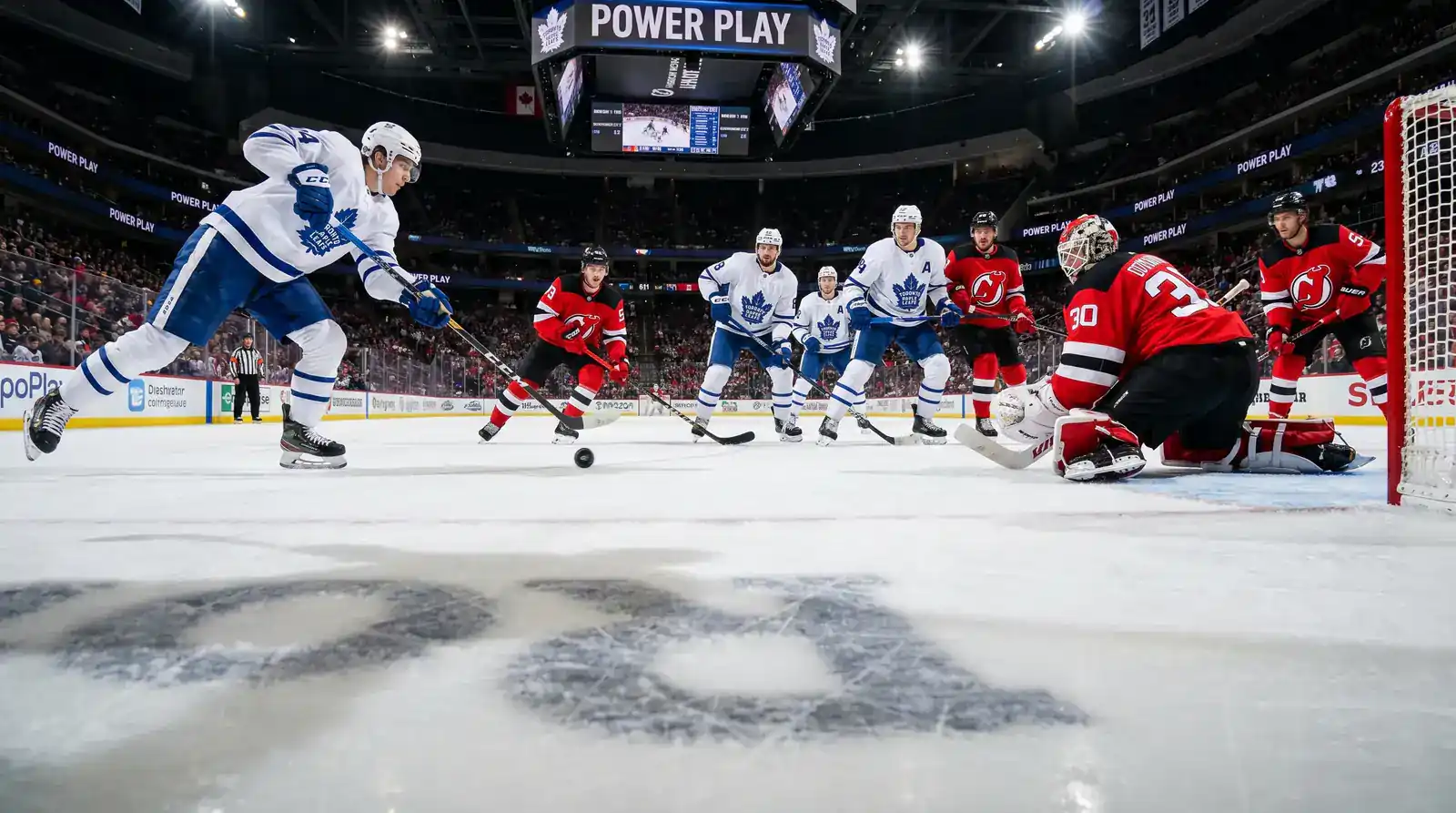
Momentum in ice hockey is more tangible than in most sports. A five-minute major penalty completely reshapes a game – the power-play team often generates two or three high-danger scoring chances in rapid succession, and the odds swing accordingly. A fight can shift emotional energy. A pulled goaltender in the final two minutes turns a tight game into a coin flip between an empty-netter and a dramatic equaliser. Each of these moments creates a pricing event, and if you are watching the game live rather than relying on a score tracker, you have an informational advantage over the model that sets the line.
A word of caution: speed is both the appeal and the risk of NHL in-play markets. The same volatility that creates value also creates opportunities for impulsive bets. I set a hard rule for myself years ago: no in-play bet without at least 30 seconds of deliberation after the trigger event. It sounds trivial, but it filters out the emotional noise and keeps the process intact. Fast markets reward fast thinkers, not fast clickers.
Betting on NHL from the UK: Time Zones, Streaming and Regulations
My wife once asked why I was still awake at 2am on a Wednesday, hunched over a laptop with three browser tabs open. “Research,” I said. She was not convinced. But that late-night window – roughly 11pm to 2am GMT on a busy NHL slate – is when most of the action happens for UK-based bettors, and pretending otherwise does a disservice to anyone planning to take this seriously.
The time zone gap is the most practical challenge for UK punters. Standard NHL evening games in North America start at 7pm Eastern, which translates to midnight GMT or 1am BST during British Summer Time. Matinee games, which typically run on Saturdays and Sundays, start around 1pm Eastern – that is 6pm or 7pm UK time, placing them squarely in the evening viewing window. These weekend matinees are genuinely prime-time for British bettors: you can watch the game, follow the in-play markets, and still be in bed at a reasonable hour.

On a typical weeknight NHL slate, the first puck drops at around 11pm UK time and the last West Coast games finish after 4am. Saturday and Sunday matinees, however, often start at 6pm or 7pm GMT/BST – making weekends the best time for UK punters to combine live watching with in-play betting.
The UK online gambling market is one of the largest in Europe, valued at $8.28 to $9.0 billion in 2025, with sports betting accounting for roughly 57% of that total. Ice hockey sits within that sports segment as a growing but still underrepresented slice. That underrepresentation is partly why value exists: bookmakers dedicate less analytical resource to pricing NHL games than they do to the Premier League, meaning the lines are softer and the margins for informed punters wider.
On the regulatory front, the UK Gambling Commission has been tightening the framework steadily. Andrew Rhodes, the UKGC’s chief executive, addressed an industry concern directly: operators have blamed UKGC-mandated affordability checks for technical issues and account restrictions that were actually caused by the operators’ own systems. As Rhodes put it, some operators tell customers that problems are a result of Commission-mandated affordability checks when they are not, calling it unhelpful and insisting it needs to stop. That kind of transparency from the regulator is worth paying attention to – it signals a Commission that is actively monitoring how operators treat customers, not just rubber-stamping licences.
Regulatory update – 30 June 2026: From this date, all UKGC-licensed operators must offer deposit limits based solely on the amounts a customer deposits. This replaces previous, less standardised approaches and gives bettors a clearer tool for managing exposure. If your current bookmaker has not implemented this yet, they are running behind schedule – and that may say something about their compliance culture.
Streaming access rounds out the UK-specific picture. Several UKGC-licensed bookmakers offer live NHL coverage to customers with funded accounts, while standalone platforms also carry games. The practical benefit is significant: watching a game live rather than following a text-based score tracker gives you the visual data – body language, puck possession patterns, goaltender confidence – that informs sharper in-play decisions. If you are betting on NHL from the UK, securing reliable streaming is not optional; it is part of your analytical toolkit.
Responsible Gambling Tools for NHL Bettors
I have seen sharp, disciplined bettors lose their edge not because their analysis failed but because they stopped respecting limits. One of the smartest NHL analysts I know – someone who tracked closing line value meticulously for years – blew through his entire bankroll in a single playoff run because he abandoned his staking plan when the stakes felt higher. The tools to prevent that exist. Using them is not a sign of weakness; it is professional practice.
The Gambling Survey for Great Britain, the largest study of its kind globally, found that 47% of respondents had participated in some form of gambling in the previous month, with 37% doing so online. That is a substantial proportion of the adult population, and the UKGC has responded by mandating increasingly robust player protection mechanisms. The GSGB itself secured a four-year research contract running through 2029, commissioned with NatCen and the University of Glasgow, ensuring the data behind regulatory decisions remains current and methodologically sound.
Tools every UK NHL bettor should activate: Deposit limits – tightened under new UKGC rules covered earlier in this guide – set a hard ceiling on how much you can add to your account in a given period. Session reminders alert you after a set duration of continuous betting. Reality checks display a summary of your activity, including net wins and losses, at intervals you define. Self-exclusion via GamStop covers all UKGC-licensed operators simultaneously if you need a longer break. These are not features buried in a settings menu for appearances – they are designed to protect your bankroll and your wellbeing.

I use deposit limits myself, calibrated to my monthly bankroll allocation. It is the simplest mechanism available and the most effective, because it operates at the point of commitment rather than the point of regret. I also run a weekly review of my net position – not just profit and loss, but the psychological state I was in when placing each bet. If I notice a cluster of impulsive wagers late at night after a losing streak, that pattern tells me something the spreadsheet alone does not.
Responsible gambling and profitable gambling are not opposing goals. They are the same goal viewed from different angles. A bettor who does not manage risk is not a bettor at all – they are a gambler relying on luck, and luck has no memory.
Frequently Asked Questions About NHL Betting in the UK
Is it legal to bet on NHL games in the UK?
Yes. Betting on NHL games is fully legal in the UK provided you use a bookmaker licensed by the UK Gambling Commission. The UKGC regulates all forms of sports betting offered to UK residents, including ice hockey markets from overseas leagues like the NHL. More than 80 online operators currently hold active UKGC licences, and the Commission has significantly increased enforcement against unlicensed sites – over 102,000 URLs have been referred for removal and 264 illegal operations shut down in recent enforcement cycles. Always verify that your chosen bookmaker displays a valid UKGC licence number before depositing funds.
What are the main types of NHL bets?
The three core NHL bet types are moneyline, puck line, and totals. A moneyline bet is a straight pick on which team wins the game, including overtime and shootouts. The puck line is the NHL’s equivalent of a point spread, set at 1.5 goals – the favourite must win by two or more, or the underdog can lose by one and still cover. Totals (over/under) is a bet on the combined goals scored by both teams, with 6.5 as the most common closing line. Beyond these, UK bookmakers also offer prop bets, parlays (accumulators), futures, and live in-play markets on NHL games.
What time do NHL games start in the UK?
Most NHL games start between 11pm and 1am GMT on weeknights, since the standard North American evening slot is 7pm Eastern Time. West Coast games can tip off as late as 3am or 4am UK time. The best window for UK viewers is weekend matinees, which typically start at 1pm Eastern – translating to 6pm or 7pm GMT/BST, placing them comfortably within UK evening hours. Saturday and Sunday slates routinely include these earlier starts, making weekends the most practical time for UK punters to watch and bet live.
Which UK bookmakers offer the best NHL odds?
No single bookmaker consistently offers the best odds across every NHL market. Average margins on NHL moneylines in the UK range between 4% and 6%, but this varies by operator and by individual game. The most effective approach is to hold accounts with two or three UKGC-licensed bookmakers and compare odds before placing each bet. Factors beyond the headline odds matter too: market depth, live-betting speed, streaming availability, and settlement rules on overtime all affect the real value you receive. I evaluate bookmakers on these criteria rather than on promotional offers alone.
Does overtime count in NHL betting?
It depends on the market. Moneyline bets include overtime and shootouts – there must be a winner, so the result after any extra time is what counts. Puck line and totals bets also typically include overtime in the NHL, but some bookmakers offer “regulation time only” variants where the bet settles after three periods regardless of extra time. This distinction is critical, particularly given that around 30% of NHL games this season have gone to overtime. Always check the specific settlement rules of the market you are betting on, as conventions differ between operators.
How does the puck line work?
The puck line is a 1.5-goal spread applied to an NHL game. If you back the favourite at -1.5, they need to win by two or more goals for the bet to land. If you back the underdog at +1.5, they can lose by a single goal and your bet still wins. The puck line shifts the odds significantly compared to the moneyline: a favourite priced at 1.45 on the moneyline might be 2.10 on the puck line at -1.5, because winning by two goals is harder to achieve. Historical data shows home underdogs cover the +1.5 puck line in nearly 64% of cases, making it one of the most statistically favourable spots in NHL betting.
Can I watch NHL games live through UK betting sites?
Several UKGC-licensed bookmakers offer live NHL streaming to customers who hold a funded account or have placed a qualifying bet. Coverage varies by operator – some carry a full slate of games, while others stream selected fixtures. Beyond bookmakers, standalone services also broadcast NHL games in the UK. Watching live is a practical advantage for in-play betting, as it provides visual context – goaltender body language, puck possession, momentum shifts – that a text-based score tracker cannot capture. Check your bookmaker’s streaming schedule before relying on it for a specific game, as blackouts and rights restrictions can apply.
Written by the editors at NHL Hockey Bets.