NHL Live Betting: In-Play Strategies for Every Period
 Available in US
Table of Contents
- Why NHL Is Built for Live Betting
- How Each Period Reshapes the Odds
- Intermission Windows: the Quiet Edge
- Momentum Triggers: Power Plays, Fights and Pulled Goalies
- Live Totals and Period-Specific Betting
- What UK Platforms Need to Offer for NHL In-Play
- Managing Risk During Fast-Moving NHL Markets
- NHL Live Betting FAQ
Why NHL Is Built for Live Betting
The first time I placed an in-play NHL bet, I got hooked within sixty seconds. A team I had written off pregame scored twice in ninety seconds to tie the game, the live moneyline swung wildly, and I grabbed a price that would have been unthinkable at puck drop. That kind of volatility terrifies some bettors. For me, it is the entire appeal.
Hockey’s structure practically begs for live wagering. Three distinct periods with two intermissions create natural pauses where you can assess, recalculate and act without the clock pressuring you. Goals arrive in bursts — a game can be scoreless for thirty minutes and then produce three goals in four minutes. Penalties create sudden, predictable shifts in scoring probability. A pulled goaltender in the final two minutes transforms the market entirely. No other major sport packs this many momentum swings into sixty minutes of play.
The numbers confirm the appetite. In-play wagering accounts for over 62% of the entire online sports betting market, and hockey’s stop-start rhythm is tailor-made for it. Meanwhile, roughly 30% of NHL games in the 2025/26 season have been decided in overtime — one of the most competitive campaigns in decades. That means nearly a third of all games reach a point where the live moneyline approaches even money, creating a window of compressed odds that pregame bettors never see.
This guide walks through every angle of NHL live betting: how the odds reshape across each period, why intermissions are the sharpest windows for value, what momentum triggers to watch for and how to manage risk when the market moves faster than your analysis. If pregame betting is chess, live betting is speed chess — the same principles apply, but execution speed matters.
How Each Period Reshapes the Odds
Not all twenty minutes of hockey are created equal, and the live market knows it. Each period has a distinct character that shapes how odds move — and understanding that character is the foundation of any in-play approach.
The first period is the feeling-out phase. Teams are fresh, coaches stick to game plans, and scoring tends to be lower than in the second or third. If the pregame favourite goes down 1-0 early in the first, the live moneyline rarely panics. The adjustment is modest — maybe 10 to 15 cents — because the market correctly views a one-goal deficit with fifty minutes remaining as entirely recoverable. This is where impatient bettors make mistakes: they see a goal and lunge for the new leader at a compressed price, ignoring that the favourite’s win probability has barely shifted.
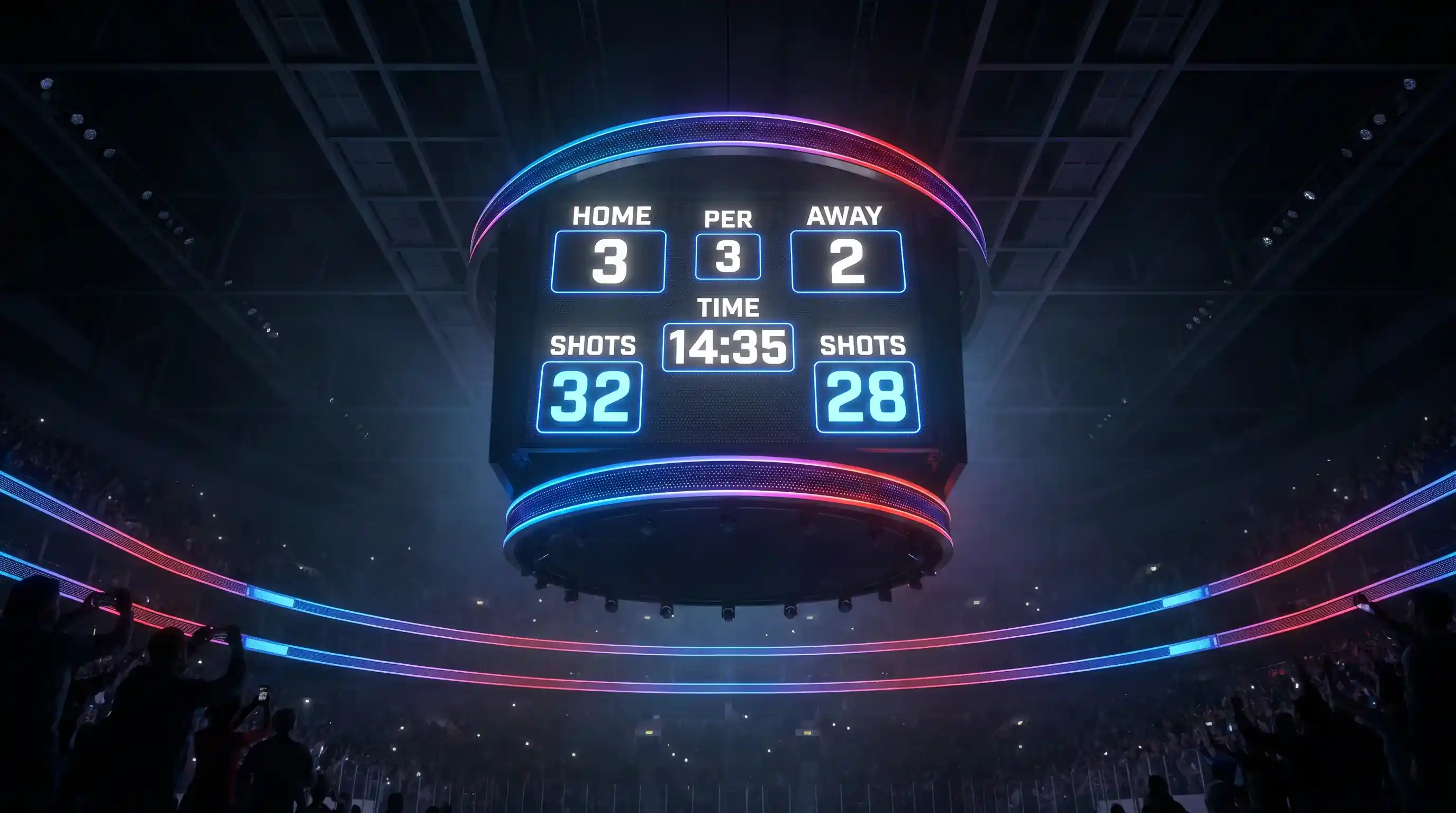
The second period is where games open up. Fatigue begins to show, coaches adjust matchups based on first-period observations, and power play units settle into rhythm. Statistically, the second period produces more goals per minute than the first in most NHL seasons. For live bettors, this means two things: moneyline swings become more frequent and more volatile, and the running total approaches the key threshold faster. If you are tracking a game sitting at 1-1 entering the second and the pregame total was 6.5, the second period is where your over/under thesis will be tested hardest.
The third period is desperation and discipline in equal measure. A trailing team pushes harder, takes more risks, pulls the goaltender in the final two minutes if the deficit is one goal. A leading team turtles, blocks shots, dumps the puck and tries to run out the clock. This creates a predictable pattern: the trailing side generates more shots and scoring chances but also concedes more odd-man rushes into an empty net. With 30% of games reaching overtime this season, a one-goal game in the third period is a genuinely even contest — and the live moneyline should reflect that. If it does not, you have a bet.
Overtime itself is a live bettor’s playground. The three-on-three format in the regular season opens up enormous space on the ice, producing end-to-end action that resembles a different sport entirely. Goals in overtime can come within seconds, and the live market becomes extraordinarily volatile. If you have a read on which team has the stronger three-on-three unit — typically the one with better skating and puck-handling forwards — the opening seconds of overtime, before the market has recalibrated from full-strength play, can offer a brief pricing edge.
The practical rule I follow: never bet the first five minutes of any period unless a specific trigger — a goal, a penalty, a goalie change — has created a clear mispricing. Let the period establish its rhythm before committing your stake.
Intermission Windows: the Quiet Edge
Here is a secret that most live bettors overlook entirely: the eighteen-minute intermission between periods is the most valuable window in NHL in-play betting. Not because something dramatic happens — but because nothing happens, and that stillness lets you think.
During play, the market moves in real time. A goal shifts odds instantly, a penalty reshuffles scoring probabilities, and you are reacting rather than analysing. During intermission, the clock stops. The ice is resurfaced. The players rest. And the live odds settle into a stable number that reflects everything the market has absorbed from the period just played. That stable number is your canvas.

What I do during every intermission is simple but disciplined. First, I review the shot count and shot quality from the period just completed. A team that dominated possession but trails 0-1 on a fluky goal is a different proposition than a team that was outshot 15-4 and is lucky to only be down one. Second, I check whether any injury or equipment issue occurred that might affect the next period. Third, I compare the current live moneyline to my pregame assessment. If the live price now offers better value than what I estimated before the game, the intermission is my entry point.
The intermission window also works for totals. If a game is 1-1 after the first period and the pregame total was 6.5, the live total might sit at 5.5 heading into the second. That half-goal shift changes the calculus. Five more goals in forty minutes is a tall order in most matchups, so the under at 5.5 can carry stronger expected value than the pregame under at 6.5 ever did — particularly if both starting goaltenders have looked sharp.
The key is preparation. You cannot run this analysis from scratch during an eighteen-minute break. You need to have done your pregame homework — goalie confirmation, schedule context, matchup quality — so that the intermission assessment is a quick update rather than a cold start. Think of it as a halftime adjustment in football: the framework is already set, you are just refining the execution.
Momentum Triggers: Power Plays, Fights and Pulled Goalies
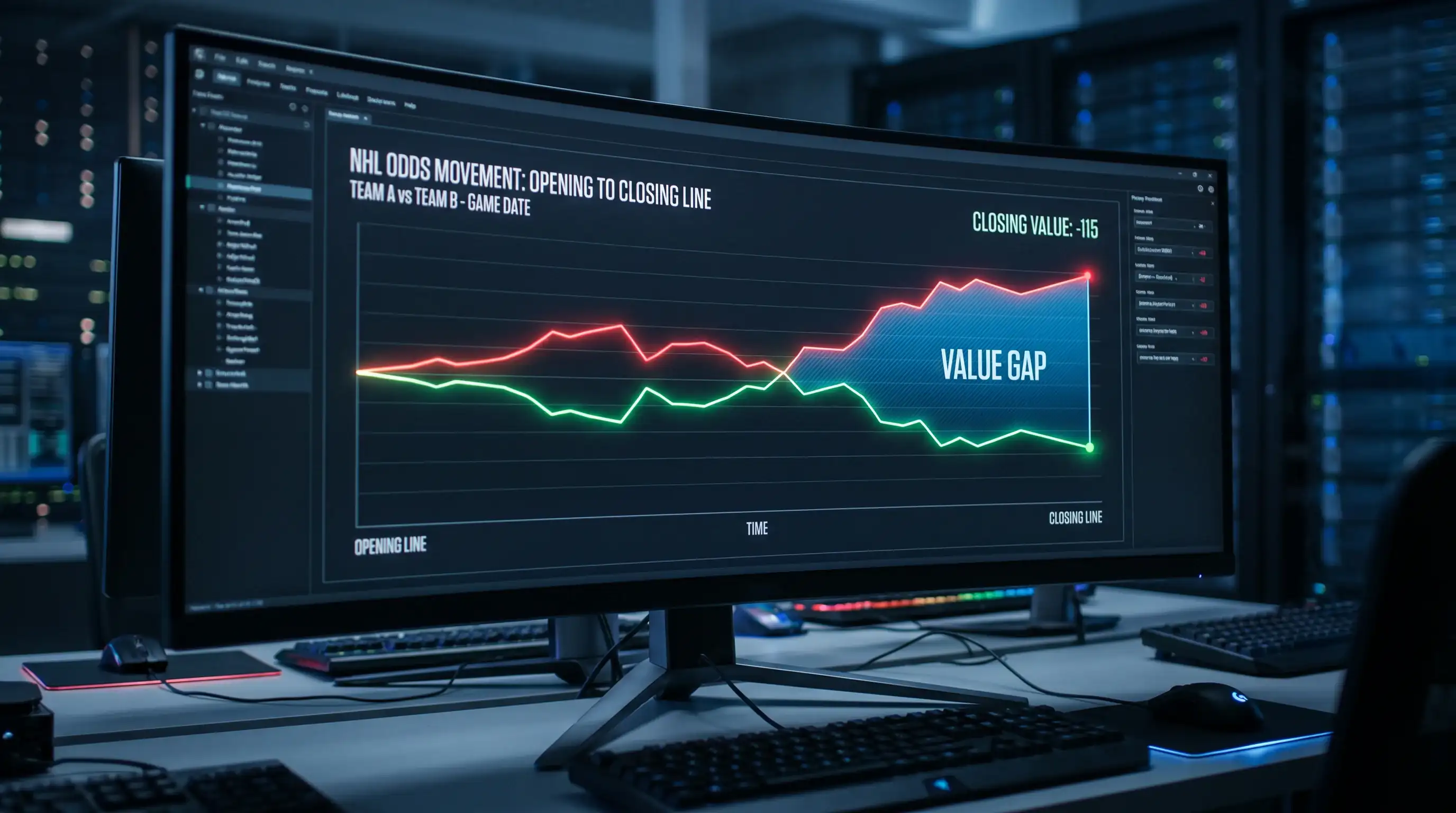
Last February I watched a game where a team took three consecutive penalties in the second period. By the time the third power play started, the live moneyline on the opposing side had shortened from 2.40 to 1.55 — all without a single goal being scored. The market was pricing in the probability of a power play goal, not the actual scoreboard. Understanding these momentum triggers is the difference between reacting to what has happened and anticipating what the market thinks will happen next.
Power plays are the most predictable trigger. When a team goes on a two-minute man advantage, the live market immediately adjusts the moneyline and the next-goal probability. League-average power play conversion hovers around 20-22%, but elite units convert at 25% or higher. If you know which team has the stronger power play unit before the game starts — and you should, because goaltending and special teams are the two factors that matter most in any NHL bet — you can assess whether the live market is overreacting or underreacting to each penalty call.
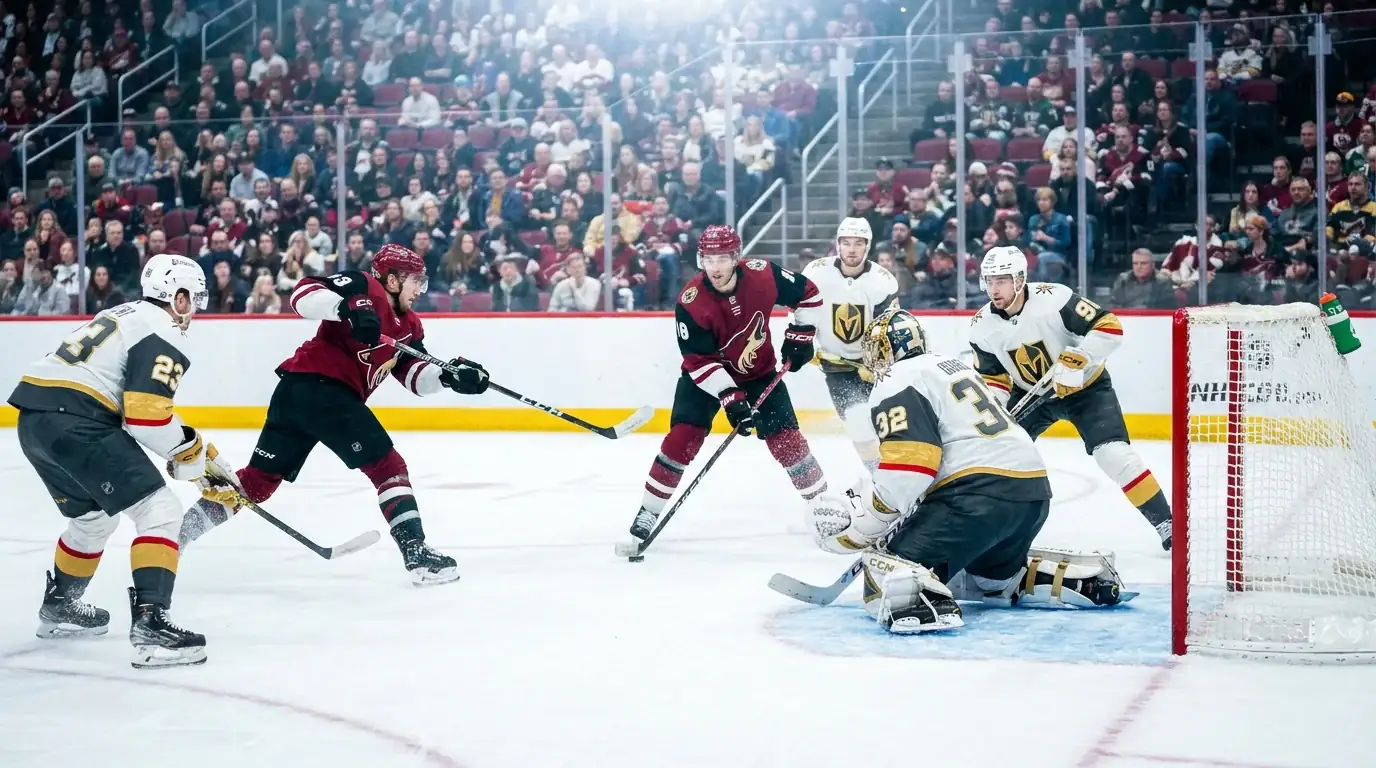
Fights and scrums create a different kind of momentum. They do not change the odds directly, but they shift energy. A team that has been flat for a period sometimes wakes up after a fight, and the next few shifts produce higher-quality chances. The market does not price this well because it is qualitative rather than quantitative. I watch for it as a soft signal — not enough to bet on alone, but enough to nudge a borderline decision in one direction.
Pulled goalies are the sharpest trigger of all. When a trailing team pulls their goaltender for an extra attacker, typically in the final 90 to 120 seconds, the game transforms into a six-on-five situation. The trailing team’s scoring probability spikes, but so does the leading team’s chance of an empty-net goal to seal the result. If you can anticipate the pull — and in a one-goal game late in the third, it is almost certain — you can position yourself on the next-goal market or the live total before the market fully adjusts. Timing is everything: the window between the pull and the next whistle is narrow, and the odds move within seconds.
Live Totals and Period-Specific Betting
Pregame totals in the NHL cluster around 6.5 — that number dominates the market because most games land between five and seven combined goals. But live totals tell a different story, and the in-play version of this market is where I have found some of my most consistent edges over the past three seasons.
The maths shifts once the game starts. If the pregame total was 6.5 and the first period ends 0-0, the live total might drop to 5.5. Two periods of scoreless hockey with both goaltenders in rhythm make the under increasingly attractive — the base rate of unders hitting at 51.2% gets amplified when you can see with your own eyes that neither team is generating high-quality chances. Conversely, a first period that ends 3-2 might push the live total to 7.5 or higher, and the over becomes a bet on continued chaos rather than an abstract number.

Period-specific totals are a separate market worth exploring. You can bet on whether the second period alone will produce over or under 1.5 goals, for example. These micro-markets are priced off league averages and do not always account for the specific matchup dynamics you have observed during the game. If both teams have been trading chances and the goaltenders look shaky, a second-period over 1.5 goals can carry better value than the full-game total because you are isolating the period where scoring intensity tends to peak.
One trap to avoid: chasing the over after an early flurry of goals. A 3-1 first period feels explosive, and the instinct is to pile onto the over. But hockey scoring is not linear. A high-scoring first period often leads to a tighter second as coaches adjust, shorten their benches and lean on defensive matchups. The game that looked like it was headed for eight or nine goals settles into a 4-3 final. I have burned myself on this pattern enough times to treat early goal surges with scepticism rather than enthusiasm.
What UK Platforms Need to Offer for NHL In-Play
Not every bookmaker treats live betting as a first-class product, and the gap between a good in-play experience and a poor one is wider for NHL than for most sports. The late-night timing of games in the UK — most puck drops fall between 23:00 and 03:00 GMT — means you are often betting from your phone on a sofa, and any friction in the interface costs you real money.
Speed is non-negotiable. A live bet placed three seconds after a penalty call should reflect the current market, not the pre-penalty price. Operators that lag behind real-time action by even five seconds create a frustrating cycle of rejected bets and stale quotes. I have abandoned platforms entirely because the in-play NHL experience was too slow, regardless of how competitive their pregame pricing was.
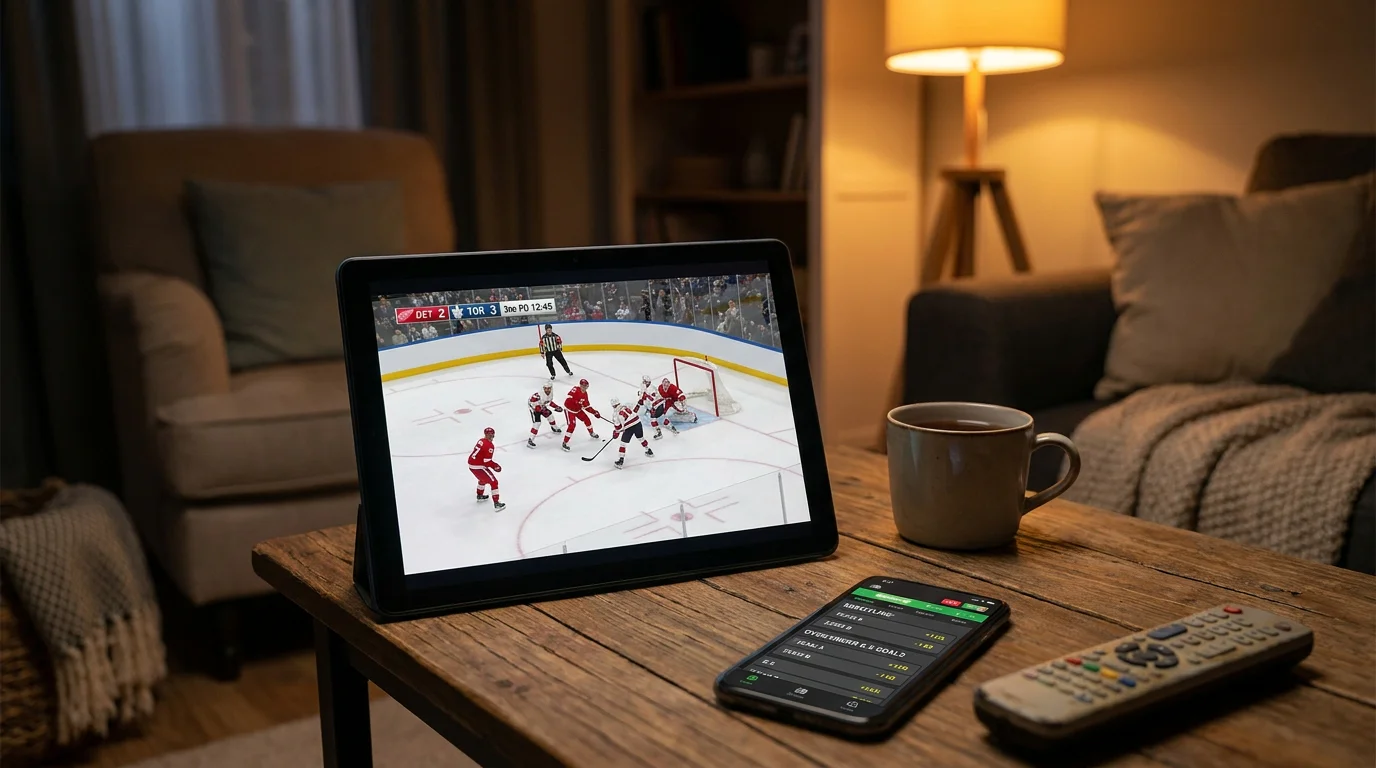
Market variety matters too. A platform that only offers a live moneyline and a running total is leaving most of the in-play value on the table. Period markets, next-goal scorer, next-team-to-score and live player props give you the tools to express specific in-game reads. If you notice a power play unit clicking midway through the second period, being able to back the next goal on that team is far more precise than simply backing the full-game moneyline.
Streaming access is the final piece. NHL platforms generated 1.2 billion streaming minutes in Q1 2025 alone — outpacing the NFL — and watching the game while you bet is not a luxury; it is a prerequisite. A live stream, even with a few seconds of delay, gives you visual information that a stat tracker cannot: body language, line combinations, how aggressively a goaltender is challenging shooters. For a detailed breakdown of which UK bookmakers bundle streaming with their accounts and how standalone platforms compare, the live streaming guide covers every option available to UK punters.
Managing Risk During Fast-Moving NHL Markets
The adrenaline of live betting is real, and it is dangerous. I have watched disciplined pregame bettors turn into reckless in-play chasers the moment a game goes sideways. Managing risk during a live NHL game requires a different kind of discipline than pregame wagering — one rooted in predetermined limits rather than real-time judgement.
My first rule: set a maximum number of in-play bets per game before the puck drops. For me, that number is two. Most games do not warrant even one live bet — the pregame analysis was correct, the game unfolds as expected, and there is nothing to add. Occasionally a genuine mispricing appears during an intermission or after a key event, and I act on it. But capping myself at two bets per game prevents the slow escalation that turns a controlled strategy into a gambling session.

The second rule is to size in-play bets smaller than pregame bets. I use half my standard unit for any live wager. The reasoning is straightforward: the information available during a game is noisier than the information available before it. You are reacting to partial data — shot counts, momentum shifts, penalty calls — rather than the full pregame picture. Smaller stakes reflect that uncertainty without removing you from the market entirely.
Cash-out features deserve a cautious mention. Most UK bookmakers offer the option to close a bet early at a reduced payout. In theory, this lets you lock in profit or cut losses. In practice, the cash-out price always favours the operator — it is built on the live odds plus a margin that is wider than the original bet’s margin. I use cash-out sparingly, only when the game situation has changed so dramatically that holding the original position no longer makes sense. Treating cash-out as a reflex rather than a calculated decision erodes your edge faster than almost any other habit.
The overarching principle: live betting amplifies both opportunity and risk. Every tool in this section — intermission analysis, momentum reads, period-specific totals — is designed to tilt the balance towards opportunity. But the tilt only works if you respect the boundaries. Two bets, half units, cash-out only when the thesis breaks. Everything else is noise.
NHL Live Betting FAQ
Can I cash out during an NHL game on UK betting sites?
Most major UKGC-licensed bookmakers offer cash-out on live NHL bets, though availability varies by market and by operator. Cash-out prices are calculated using the current live odds plus the bookmaker’s margin, so the offered amount will always be less favourable than the theoretical fair value. Use it selectively — only when the game situation has shifted enough to invalidate your original thesis.
How quickly do NHL in-play odds update after a goal?
On the fastest UK platforms, odds update within two to five seconds of a goal being confirmed. Slower operators can take ten seconds or longer, during which the market may be suspended entirely. Speed matters because the seconds immediately after a goal are when the biggest mispricings occur. If your platform consistently lags behind the action, it is worth testing alternatives.
Is intermission a good time to place an NHL live bet?
Intermissions are the best windows for live NHL betting. The eighteen-minute break between periods gives you time to review shot quality, check for injuries and compare the current live line against your pregame assessment. Unlike in-play betting during action, where you are reacting under pressure, the intermission lets you analyse calmly and act deliberately. Many of my most profitable live bets have been placed during these pauses.
Created by the ”NHL Hockey Bets” editorial team.