
Stanley Cup Betting: Odds, Trends and Historical Patterns
 Available in US

The Crown Jewel of NHL Betting Markets
Nothing in the NHL calendar generates more betting volume than the Stanley Cup playoffs. The intensity ramps up round by round — longer games, tighter checking, goaltenders standing on their heads — and the market responds with deeper liquidity and sharper prices. During the 2026 playoffs, first-round viewership averaged 1.8 million viewers, a 68% jump over 2025, and second-round numbers hit 1.9 million, a league record. That surge in attention pulls casual money into the market, which in turn creates opportunities for bettors who have done the homework.

The Cup winner market is the longest-running futures bet in hockey. It opens the moment the previous champion lifts the trophy and does not settle until the following June. That lifespan — roughly twelve months — makes it fundamentally different from nightly game bets. You are not reacting to tonight’s lineup; you are projecting a team’s arc across an entire season and four playoff rounds. The reward for getting it right can be enormous: pre-season prices of 20.00 or longer are not uncommon for teams that go on to win it all.
How Stanley Cup Odds Are Structured and When They Shift
Cup winner odds are structured as an outright market: thirty-two teams, each with a price, all competing for the same outcome. The favourite might open around 5.00, the middle of the pack sits between 15.00 and 30.00, and the longest shots can reach 100.00 or beyond. Prices shift throughout the season in response to results, injuries, trades, and public betting volume.
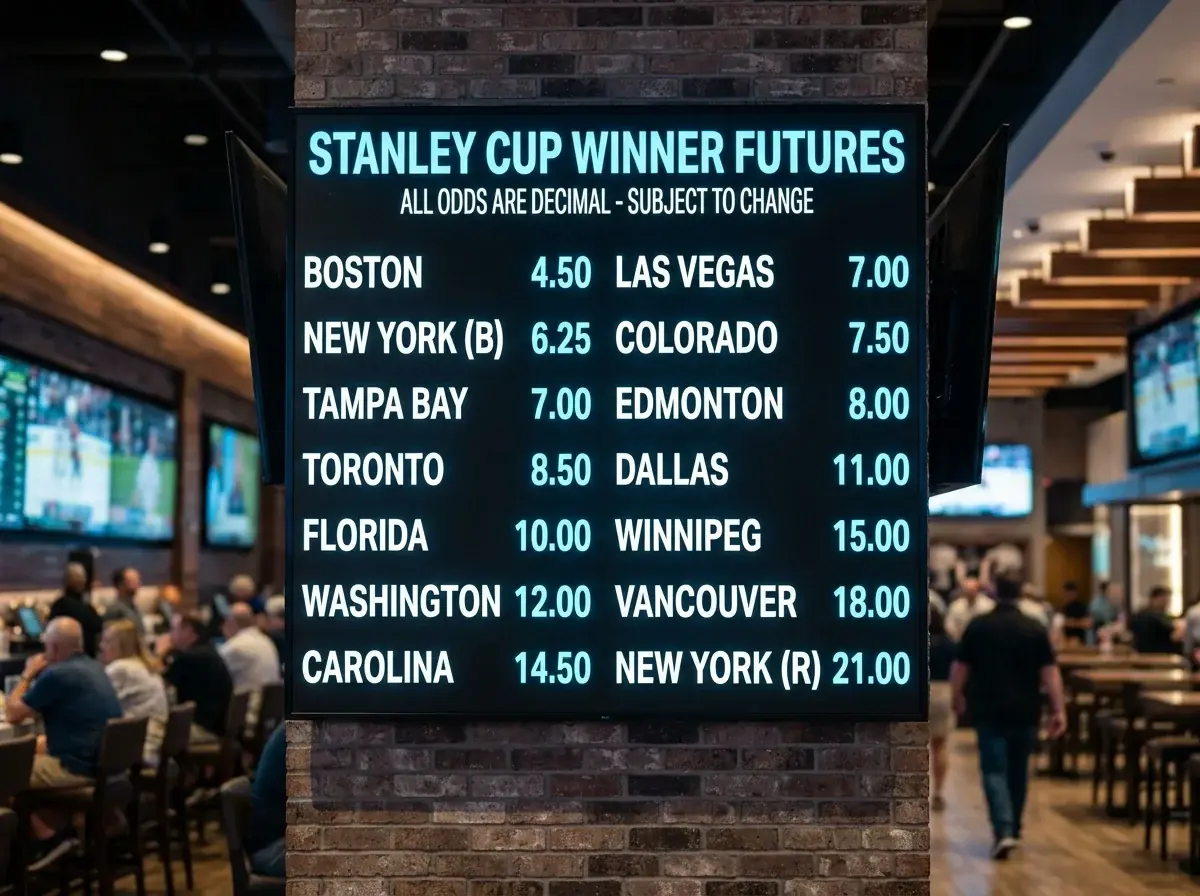
The biggest movements happen at three inflection points. The first is the opening month of the season. Teams that start hot see their odds compress rapidly, while slow starters drift out. Public perception crystallises quickly, sometimes too quickly, creating value on teams whose early struggles mask deeper quality. The second inflection is the trade deadline, where a single blockbuster deal can move a team’s Cup odds by several points in a matter of hours. The third is the playoff bracket itself: once matchups are set, the market reprices based on specific head-to-head dynamics rather than general standing.
Revenue context matters for understanding odds movement. The NHL hit record revenue exceeding 7 billion USD in 2023/24, and the league’s financial growth ensures that bookmakers invest heavily in NHL pricing models. More sophisticated models mean tighter odds in the Cup market, which makes early-season entry — before the model has a season’s worth of data — the most fertile ground for finding mispriced teams.
Historical Betting Trends: Seeds, Upsets and Value Picks
If you only bet on the top seed in each conference to win the Cup, you would lose money over the long run. The NHL playoff format is a best-of-seven gauntlet that punishes one-dimensional teams and rewards depth, goaltending, and adaptability. Upsets are not anomalies — they are embedded in the structure of the sport. NHL underdogs won 39.1% of regular-season games in 2024/25, and that parity carries into the postseason where every series is a war of attrition.

Lower seeds have won the Cup repeatedly in recent history, and the betting market does not always price that upset potential accurately. A fourth seed trading at 12.00 might represent better value than the first seed at 4.00 if the fourth seed has elite goaltending and a favourable first-round matchup. The Cup is not won by the best regular-season team — it is won by the team that peaks at the right time, stays healthy, and gets the goaltending performance of a lifetime.
Historical data also reveals a pattern around rest days. Teams that close out a series in fewer games enter the next round with more recovery time, and that compounding rest advantage grows through each round. Bettors who track series length and rest differential can anticipate which teams arrive at the Conference Finals fresher — and freshness matters enormously in a sport this physically demanding.
The deeper historical lesson is that the market overvalues regular-season dominance and undervalues playoff-specific qualities like goaltending depth, defensive structure, and experience. Targeting teams with those traits at pre-season or early-season prices is how I have found the most consistent long-term futures value.
Betting the Stanley Cup from the UK: Timing and Access
UK bettors have full access to Cup winner markets through every major UKGC-licensed bookmaker. The market is typically listed under “Ice Hockey” or “NHL” in the futures or outrights section. Availability is year-round, though some smaller operators may suspend the market briefly between seasons.

Timing matters practically as well as strategically. Playoff games start between 11 PM and 3 AM UK time, which means live betting on individual playoff matches requires late nights. But the Cup winner market itself is not time-sensitive in the same way — you can place or adjust your position at any point during the bookmaker’s opening hours, and the price will reflect the latest available information.
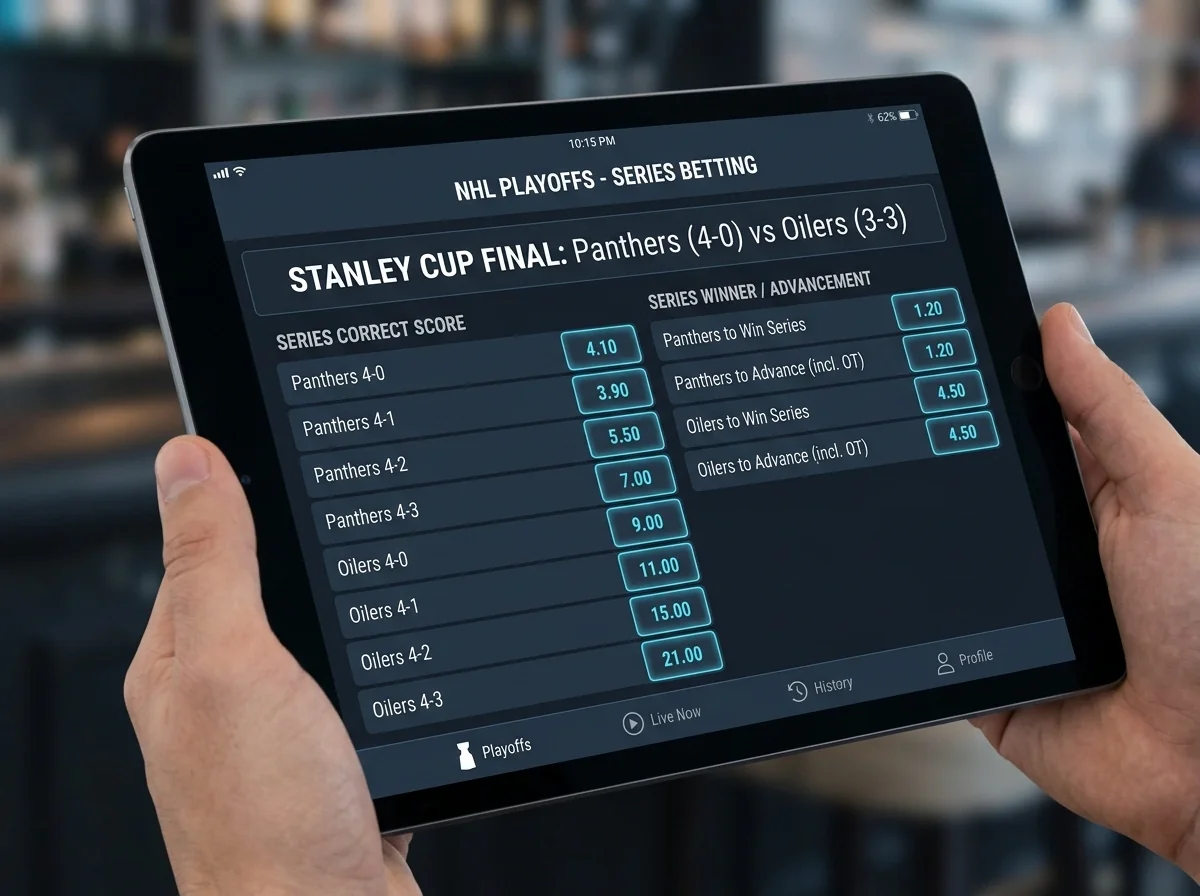
The 2026 playoffs have pulled record audiences — second-round viewership hitting 1.9 million is a 55% increase over the previous year — and that growing attention is expanding the depth of NHL playoff markets available in the UK. Where you once found only the Cup winner and conference winners, many operators now offer series correct scores, round advancement props, and Conn Smythe Trophy (playoff MVP) futures. The richer the menu, the more angles available for bettors willing to study the matchups.
One practical consideration: cash-out availability on Cup futures varies between bookmakers. Some allow partial cash-out at any stage, enabling you to lock in profit if your selection reaches the Conference Finals without needing to hedge manually. Others restrict cash-out once the playoffs begin. Knowing your bookmaker’s policy before the postseason starts saves frustration later.
How to bet on the Stanley Cup winner in the UK?
Open the NHL or ice hockey section on any UKGC-licensed bookmaker and look for ‘Stanley Cup Winner’ or ‘NHL Outright Winner’ under futures markets. Select the team you want to back, enter your stake in pounds, and confirm. Your bet will remain open until the Cup is awarded, typically in mid-June. Many bookmakers offer cash-out during the season or playoffs if you want to secure profit before the final result.
When do Stanley Cup odds offer the best value?
The widest value windows are immediately after the previous season ends and during the first month of the new season, when prices are shaped by projection rather than results. Mid-season value appears around the trade deadline when roster moves are not yet fully priced in. By the time the playoffs start, odds are tighter and reflect more consensus, though individual series matchups can still produce mispriced round-advancement or series-score markets.
Created by the ”NHL Hockey Bets” editorial team.