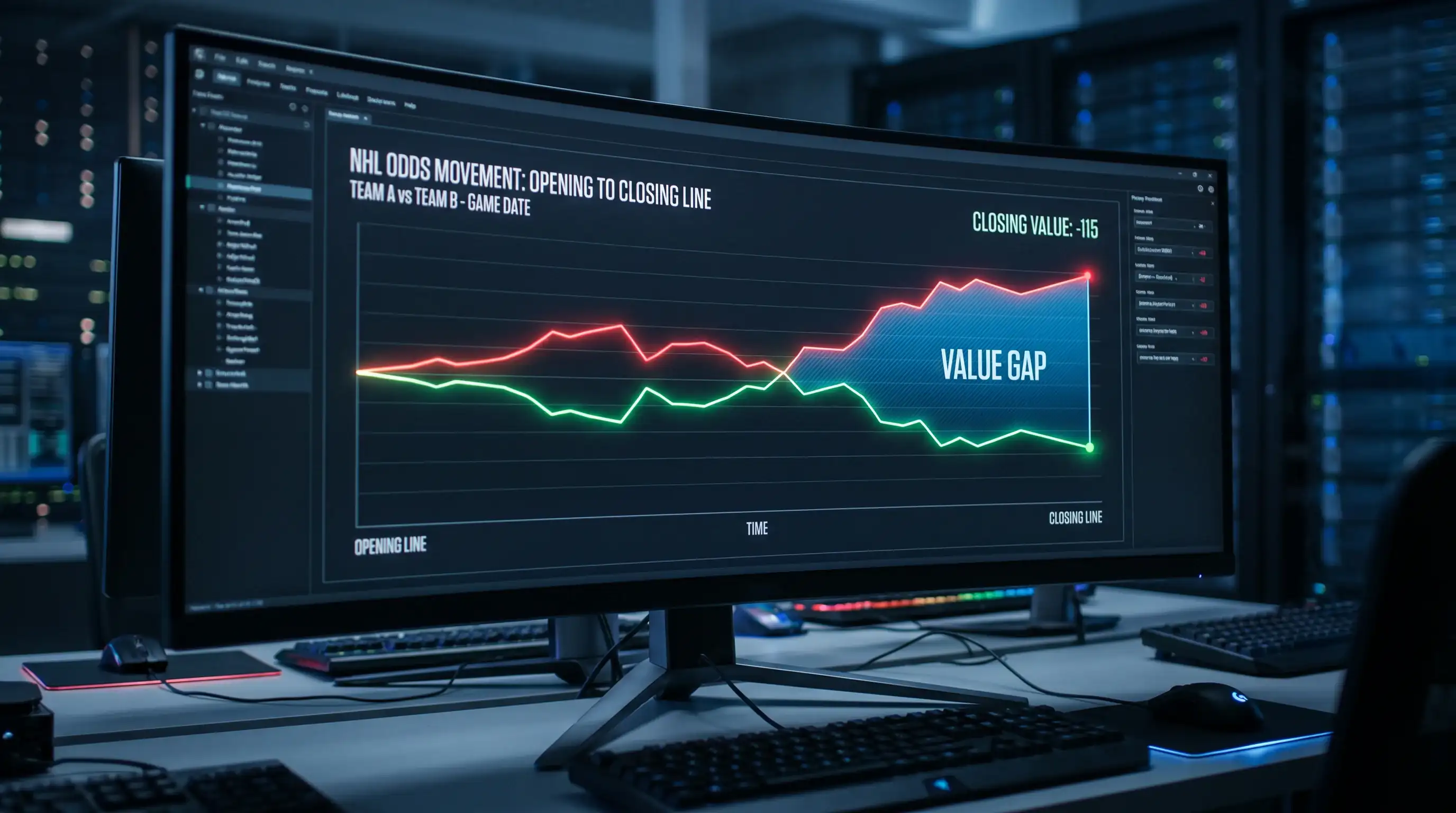
NHL Playoffs Betting: Strategies for the Postseason Grind
 Available in US

Playoffs Are a Different Sport — Bet Accordingly
The first time I applied my regular-season model to a playoff game, I got crushed. The metrics that had served me well from October through April — schedule spots, back-to-back fatigue, backup goaltender starts — vanished overnight. Playoff hockey eliminates the noise: there are no back-to-backs, every team starts its number-one goaltender, and the intensity jumps by an order of magnitude. If you bet the playoffs the way you bet the regular season, you will lose, because you are playing a different game with the wrong playbook.
The 2026 playoffs have reinforced this lesson emphatically. First-round viewership averaged 1.8 million viewers, a 68% increase over 2025, and second-round numbers climbed to 1.9 million — a league record and a 55% year-on-year jump. That surge in audience pulls casual money into the market, widening the gap between sharp pricing and public perception. More casual money means more opportunity for disciplined bettors who understand the specific dynamics of postseason hockey.
Series Prices, Correct Score and Round Advancement
Playoff betting offers markets that do not exist during the regular season, and the most interesting is the series price — a bet on which team wins a best-of-seven. This is functionally a futures bet within a futures bet: you are staking on an outcome that unfolds over two weeks, with each individual game shifting the probability.
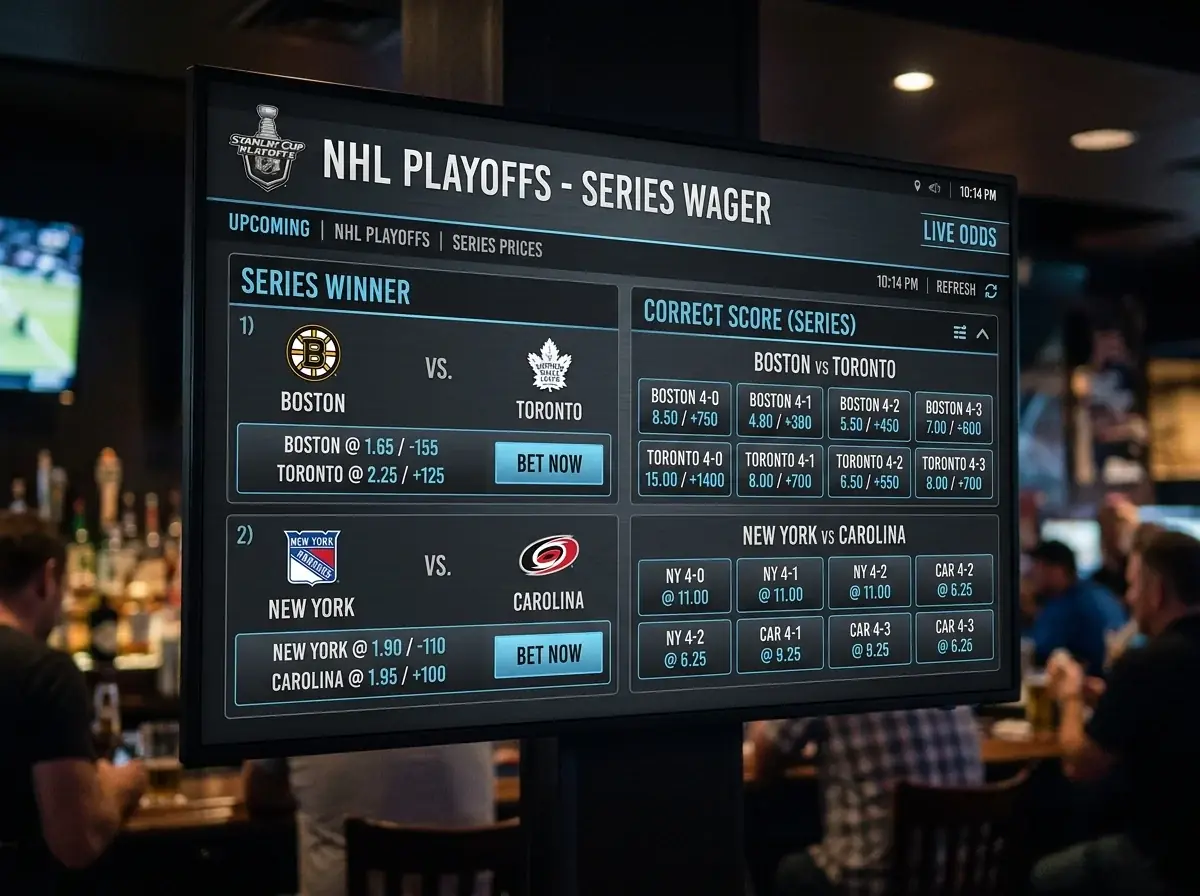
Series correct score markets ask you to predict the exact number of games in which the series is decided: 4-0, 4-1, 4-2, or 4-3 in either direction. These markets carry wider margins because they involve predicting both the winner and the margin, but the prices can be long — 4-0 sweeps routinely trade at 8.00 or higher — and the analytical tools for assessing them are underused by casual bettors.
Round advancement is a simpler variant: you bet on whether a team reaches the second round, the Conference Final, or the Cup Final without specifying the series result. These markets offer value when a team has a favourable first-round matchup but faces a tougher projected second-round opponent. The market prices the overall advancement probability, but if you can isolate the first-round as a near-certainty and the second-round as a coin flip, the advancement price sometimes reflects the harder round more than the easier one.
Individual Game Angles: Home Ice, Goaltending and Rest Days
Regular-season home-ice advantage runs at 64.1% for home favourites. In the playoffs, that number shifts because every game carries elimination pressure and teams play with a desperation that compresses talent gaps. Home ice still matters — the team with home-ice advantage hosts Games 1, 2, 5, and 7 — but the advantage is most pronounced in Games 1 and 2, where the series is fresh and crowd energy is at its peak.

Goaltending dominates playoff betting more than any other factor. Regular-season data on starting goaltenders remains relevant, but playoff performance introduces new variables: workload management, the psychological pressure of a seven-game series, and the tendency for elite goaltenders to elevate their game when the stakes rise. A starter who posted a .915 save percentage during the regular season might play at .930 in the first round — or collapse to .890 under the weight of the moment. Historical playoff splits for specific goaltenders provide an edge that aggregate regular-season data cannot.

Rest days between games create a subtle but measurable advantage. In the 2025/26 season, around 30% of regular-season games went to overtime, and that pattern extends into the playoffs where overtime is even more common due to the closeness of the competition. Teams that close out earlier rounds in fewer games enter the next round with extra days of rest, and that freshness advantage compounds through each subsequent series. Tracking the rest differential between two teams entering a series — and comparing it to the series price — reveals whether the market is accounting for the physical toll or ignoring it.
Recent Playoff Trends: Upsets, Unders and Overtime Rates
NHL underdogs won 39.1% of regular-season games in 2024/25, and that parity does not disappear in the playoffs. Lower seeds regularly upset higher seeds in best-of-seven formats, because the compressed talent pool at playoff level means that goaltending, special teams, and matchup advantages can outweigh regular-season positioning. A sixth seed with an elite goaltender and a strong penalty kill is genuinely dangerous against a third seed that relies on five-on-five offence.

Totals tend to compress in the playoffs. Scoring drops as defensive intensity increases, coaching adjustments tighten systems, and goaltenders face fewer low-quality shots. The standard regular-season closing total of 6.5 often drops to 5.5 or 6.0 in playoff matchups, and unders have historically hit at a slightly higher rate than overs in the postseason. If you carried an unders lean during the regular season, the playoff environment amplifies that tendency.

Overtime rates climb for the same reasons scoring drops: the games are tighter, the margins are thinner, and neither team is willing to take risks that might cost them a series-deciding goal. In the regular season, around 30% of games reach overtime. In the playoffs, that figure is comparable but the nature of overtime changes — playoff OT is sudden-death full periods rather than five-minute three-on-three, which produces longer, more gruelling extra sessions. Bettors who understand these structural differences can identify games where overtime is more likely and target series and game markets that benefit from tight, low-scoring affairs.
Does NHL playoff overtime work differently for betting?
Yes. Regular-season overtime is a five-minute three-on-three period followed by a shootout if no goal is scored. Playoff overtime is sudden-death with full twenty-minute periods at five-on-five, continuing until a goal is scored — there are no shootouts. For betting purposes, standard moneyline and puck line bets include all overtime periods. Some markets specify ‘regulation time only’ and exclude OT entirely. Always check the market rules on your slip.
Are underdogs more profitable in the NHL playoffs?
Lower seeds upset higher seeds regularly in the NHL playoffs due to the sport’s inherent parity and the outsized influence of goaltending. Underdogs won 39.1% of regular-season games in 2024/25, and that competitive balance extends to the postseason. Whether underdogs are profitable depends on the price: a lower seed at 2.60 needs to win roughly 38% of games to break even, and many playoff underdogs exceed that threshold. The value lies in specific matchups rather than blind underdog backing.
Written by the editors at NHL Hockey Bets.