NHL Back-to-Back Games Betting: Exploiting Fatigue on the Schedule
 Available in US

The 40% Problem: Away Teams on Zero Rest
Twelve hours between the final buzzer and the next puck drop. A red-eye flight across a time zone. A backup goaltender getting the call because the starter played 60 minutes the night before. That is what a back-to-back looks like in the NHL, and it is one of the most reliable schedule-based edges in sports betting.
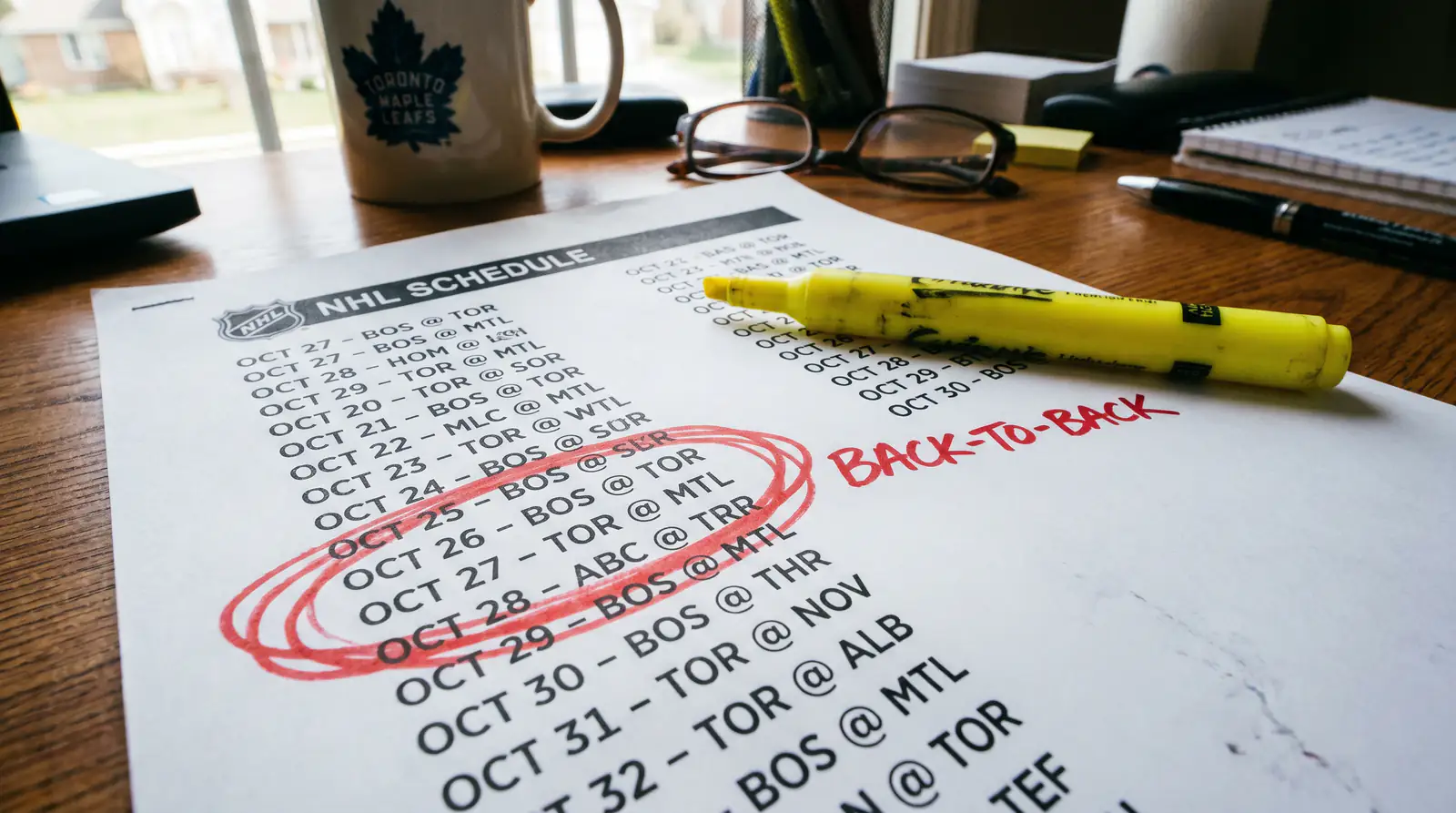
Since the start of the 2023 season, away teams playing the second game of a back-to-back have posted a record of 205-309 straight up — a 40% win rate. That number is not a blip or a small sample artefact; it spans hundreds of games across multiple seasons and represents a persistent, exploitable pattern. The NHL’s 82-game schedule guarantees every team faces multiple back-to-backs, and the second night — particularly on the road — is where fatigue becomes measurable in the results.
For UK bettors, back-to-back situations are easy to identify. The NHL schedule is published months in advance, and multiple free resources flag which teams are on zero rest on any given night. The hard part is not finding these spots; it is filtering them into bets that carry genuine value rather than just fading tired teams at prices that already reflect the disadvantage.
Back-to-Back Records Since 2023
The 205-309 road back-to-back record breaks down further when you separate the context. Teams playing the second night of a back-to-back at home perform significantly better — closer to a 48-50% win rate — because they eliminate the travel variable. They slept in their own bed, practiced at their own rink, and face a crowd that energises rather than drains. The 40% problem is specifically a road problem, driven by the compounding effect of travel on top of fatigue.

Totals tell an interesting parallel story. Back-to-back road games tend to produce slightly higher-scoring contests, as tired defending leads to more goals in the third period. The gap is modest — perhaps half a goal on average — but for a totals market centred on 6.5, where half a goal shifts a significant percentage of outcomes from under to over, even a small scoring bump changes the calculus.
Not all back-to-backs are created equal. A team playing Saturday night in New York and Sunday afternoon in New Jersey barely travels — it is essentially a home-home situation despite the road designation. A team playing Friday in Vancouver and Saturday in Calgary flies 600 miles overnight across the Rocky Mountains. The win-rate gap between short-travel and long-travel back-to-backs is substantial, and treating them identically is a mistake.
Goalie Rotation on Back-to-Backs and Betting Impact
Marcus Chen of Tech Insider was right when he called goaltending the single biggest factor in any NHL bet, and nowhere is that more visible than on the second night of a back-to-back. The overwhelming majority of coaches start their backup goaltender in the second game, preserving the starter’s workload across the long season. That rotation is predictable and creates a cascading effect on the betting market.

When a team announces its backup for the second night, the moneyline moves — often by 15 to 20 cents. A team that was 1.70 with the starter might drift to 1.90 or beyond with the backup. This movement happens whether the team is at home or on the road, but the impact is magnified on the road because it stacks on top of the fatigue and travel effects already priced in.
Here is where it gets tactical. Some teams carry a backup goaltender who is genuinely competent — a career save percentage above .910, capable of stealing a game on any given night. When those teams rotate to the backup on a back-to-back, the line often overreacts because the market treats all backups as equal downgrades. Tracking individual backup performance — save percentage, goals against average, and win rate in back-to-back starts specifically — gives you an edge in assessing whether the market has overshot or undershot the goalie change.
The opposite also applies. Some backups are genuinely terrible, and their teams know it. In those cases, the line may not move far enough, because the moneyline adjustment is capped by the general back-to-back pricing model rather than reflecting the specific goaltender’s weakness.
Home vs Away, Travel Distance and Time Zones
The 40% win rate for road back-to-backs is an average, and averages hide the extremes that generate the best betting opportunities. Home teams in a back-to-back situation perform near their overall season average because they skip the travel component. An opponent travelling to play them, especially if the opponent is also on a back-to-back, creates a double-fatigue scenario that inflates the home team’s probability well beyond the line’s implied figure.
Directional travel matters. Westbound overnight flights are more disruptive than eastbound because the body clock loses hours. A team finishing a game in Toronto at 10 PM Eastern and flying to Winnipeg for a 7 PM Central start the next day loses two hours of sleep to the time-zone shift. Eastbound trips — flying from Los Angeles to Denver, for instance — gain an hour and allow earlier arrival, partially offsetting the fatigue effect.

Home favourites with 64.1% win rates become even stronger when facing a road opponent on a back-to-back. The combination of home-ice advantage and opponent fatigue can push the true probability above 70% in specific matchups, yet the line rarely shortens below 1.35 because bookmakers balance their liability across the full slate. That gap between model probability and market price is the strategic foundation of back-to-back betting.
My routine for every slate: before I look at odds, I check which teams are on a back-to-back. I note whether the second game is home or away, how far they travelled, and which goaltender is likely to start. Only after those boxes are filled do I open the bookmaker and compare my assessment to the market price. If the price does not offer value relative to my model, I pass — because the edge in back-to-back betting is not about fading tired teams indiscriminately; it is about identifying the specific combinations of fatigue, travel, and goaltending that the market has not fully captured.
How do back-to-back games affect NHL betting lines?
Lines adjust to reflect fatigue, particularly when the second game is on the road. The moneyline on a team playing its second game in two nights typically lengthens by 10 to 20 cents, with further movement when the backup goaltender is confirmed. Totals may also nudge higher on the expectation that tired teams concede more goals, especially in the third period.
Should I always bet against the away team on back-to-backs?
No. While away teams on back-to-backs win only about 40% of the time, the bookmaker prices reflect that disadvantage. Blindly fading every road back-to-back does not produce profit if the odds already account for the fatigue. The edge comes from specific situations — long-distance travel, weak backup goaltenders, or facing a rested home team with strong defensive metrics — where the market has underestimated the compounding disadvantages.
Created by the ”NHL Hockey Bets” editorial team.