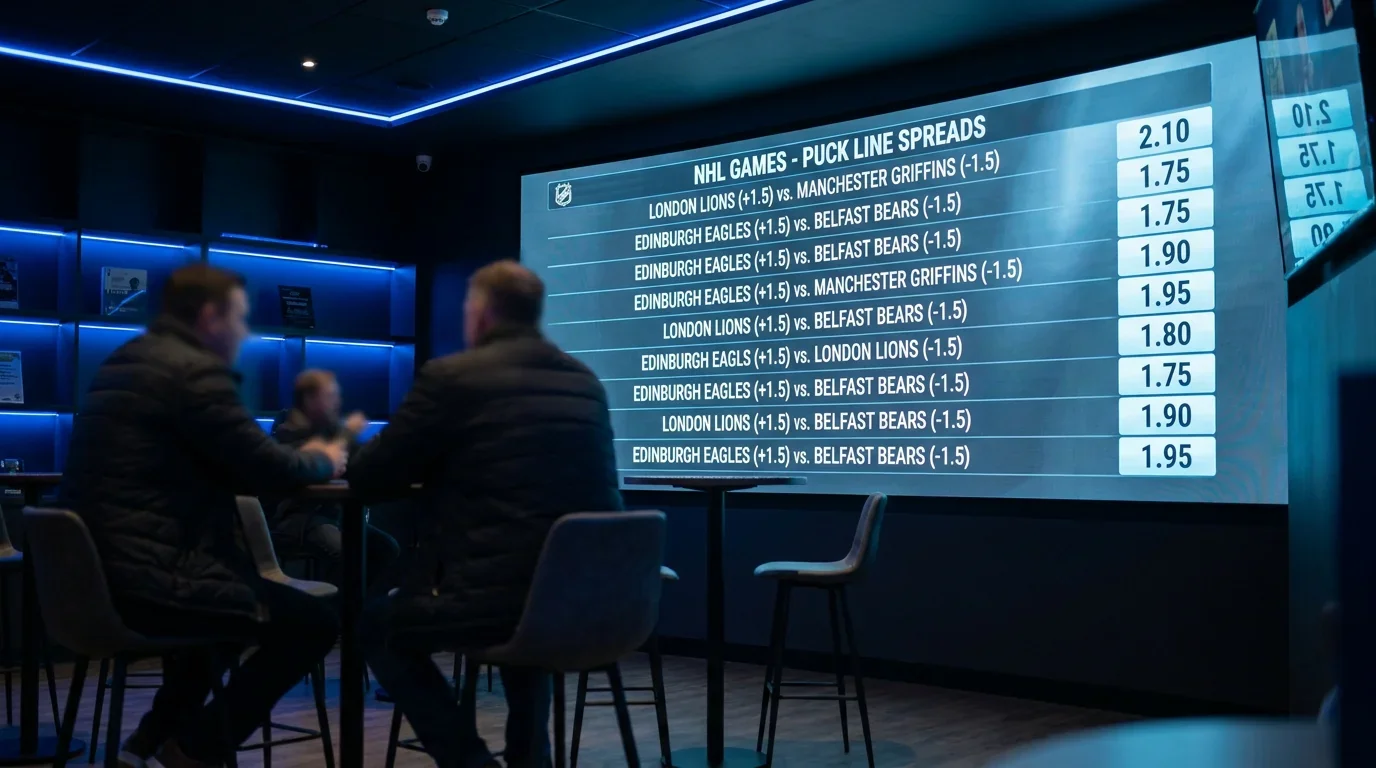
NHL Prediction Markets: How Kalshi and Polymarket Changed the Game
 Available in US
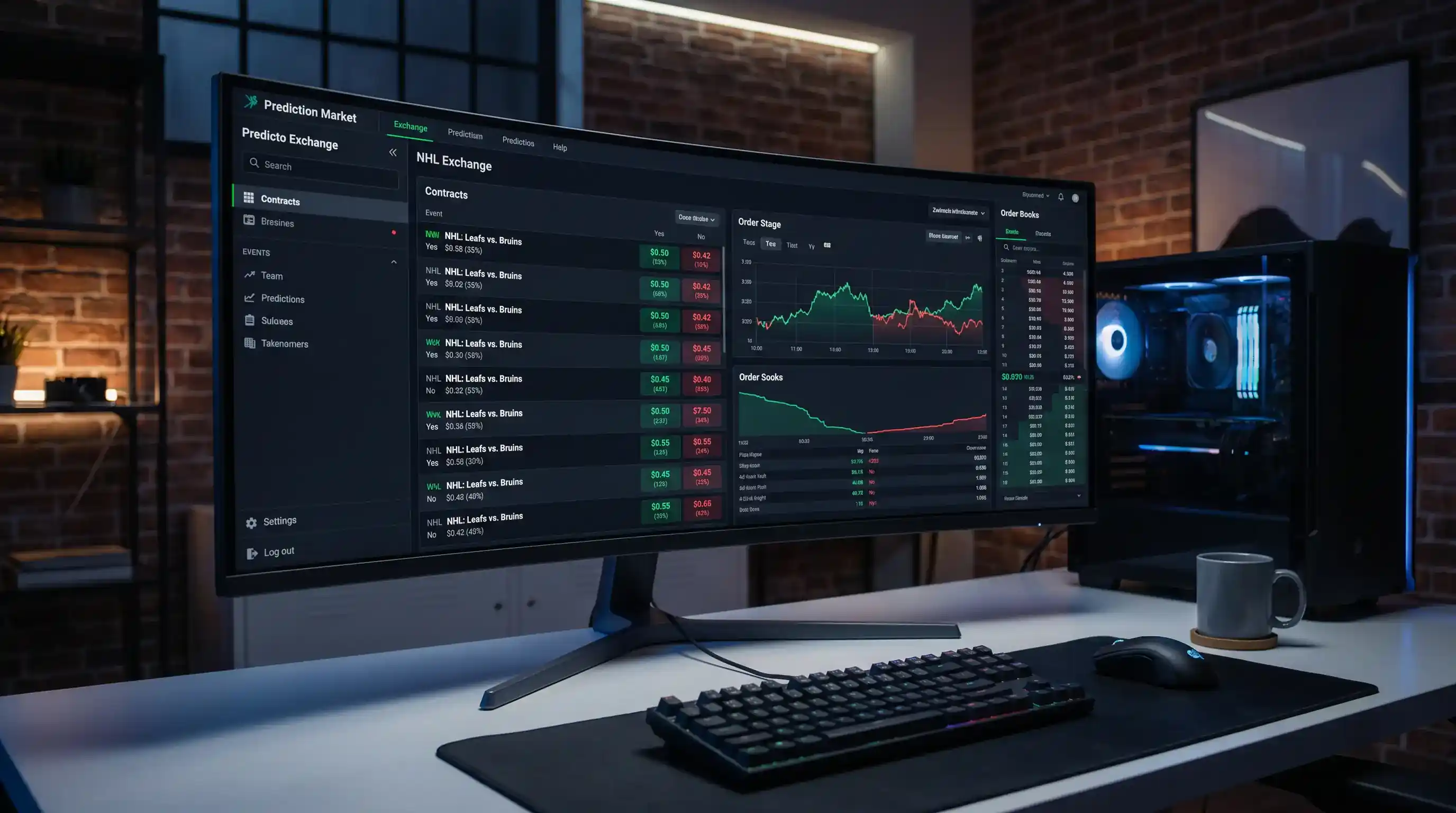
NHL as the First Major League to Embrace Prediction Markets
When the NHL announced its partnership with Kalshi and Polymarket in October 2025, I nearly dropped my coffee. No major North American sports league had ever officially aligned with prediction market platforms — and hockey, not football or basketball, was the one to move first. That decision told me more about the league’s strategic thinking than any earnings call or press conference ever could.
Prediction markets are not new. They have existed in political and financial contexts for years, allowing participants to buy and sell contracts on binary outcomes — “Will X happen? Yes or No?” — with prices that fluctuate between zero and one hundred cents based on the market’s collective probability estimate. Applying that model to sport means you can trade contracts on outcomes like “Will Edmonton win the Stanley Cup?” the same way you might trade a contract on an election result. The NHL saw an opportunity to bring its fans into that ecosystem and, critically, to maintain oversight of which contracts are listed.
Gary Bettman, the NHL commissioner, framed the move in terms of control and data integrity. The league partnered with prediction markets because it wanted fans making informed decisions based on real data, and because the partnership gave the NHL the ability to remove any contracts it deemed inappropriate. That blend of openness and governance is unusual in a sports landscape where most leagues have treated betting platforms with suspicion or outright hostility.
How Event Contracts Differ from Traditional Bets
If you have ever placed a bet with a UK bookmaker, the mechanics of a prediction market contract will feel both familiar and foreign. Familiar because you are staking money on an outcome. Foreign because you are not betting against a bookmaker — you are trading with other participants on an exchange.
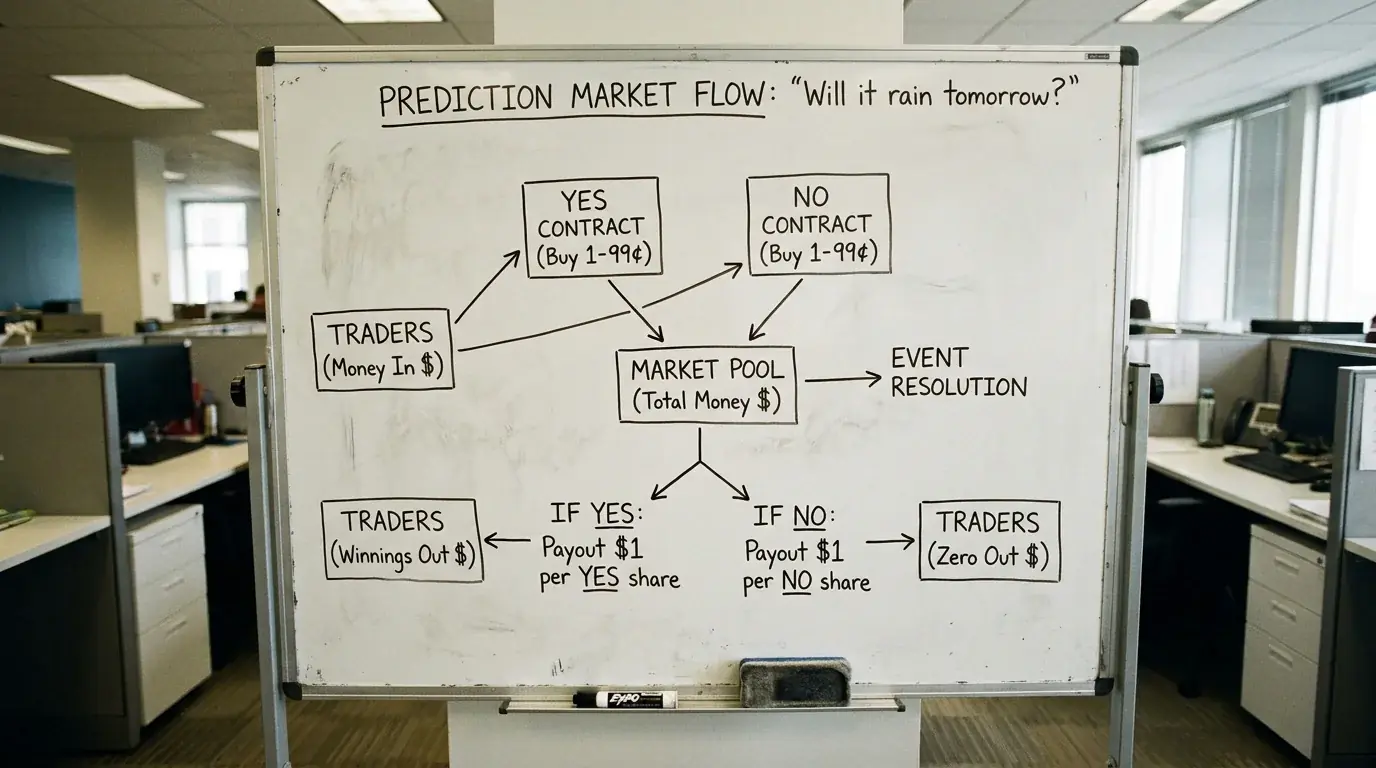
A traditional bookmaker sets odds, takes both sides of the action, and profits from the margin built into the price. A prediction market works differently: participants buy “Yes” or “No” contracts at prices determined by supply and demand. If the market prices a “Yes” contract at 35 cents, you pay 35 cents and collect 100 cents if the outcome occurs — a profit of 65 cents per contract. If it does not occur, you lose your 35 cents. The implied probability is simply the contract price expressed as a percentage: 35 cents equals 35%.
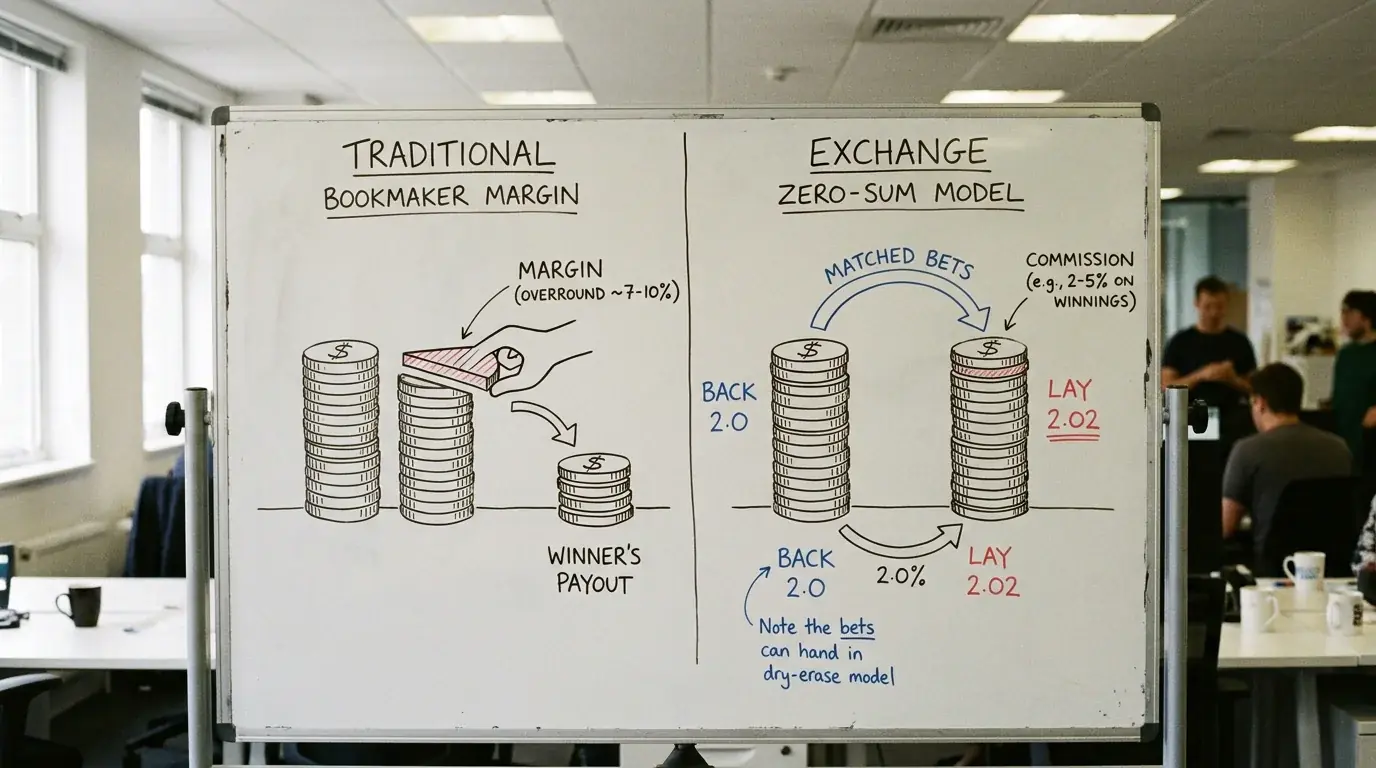
The absence of a bookmaker margin is the key structural difference. In a prediction market, the combined price of “Yes” and “No” contracts sums to exactly 100 cents (or very close to it, with a small exchange fee). On a traditional bookmaker, the combined implied probability exceeds 100% by the margin — typically 4-6% on NHL moneylines in the UK. That margin compression makes prediction markets theoretically cheaper to participate in, though liquidity and availability create their own constraints.
Bettman himself described the convergence between traditional sportsbooks and prediction markets as inevitable, noting that a morphing is coming between regulated sportsbooks and the prediction markets. For UK punters accustomed to the bookmaker model, understanding this alternative structure is worth the effort — not because it will replace your current workflow overnight, but because it represents where the industry is heading.
Inside the NHL-Kalshi-Polymarket Partnership
The partnership is not a loose endorsement. The NHL has formal betting partnerships with four major operators — Caesars, BetMGM, DraftKings, and FanDuel — and the prediction market alignment sits alongside those deals as a complementary channel rather than a competitor. Kalshi operates as a CFTC-regulated exchange in the United States, offering event contracts on a range of outcomes. Polymarket operates in the decentralised space, using blockchain-based settlement.

What makes the NHL’s approach distinctive is the editorial control. The league retains the right to approve or reject specific contracts, ensuring that markets do not emerge around outcomes that could compromise game integrity — in-game prop bets on individual penalties, for example, or contracts tied to events a single player could manipulate. Bettman emphasised that the partnership gives the league control, allowing it to take down any contracts it considers inappropriate.

The commercial logic is straightforward. Prediction markets attract a younger, more digitally native audience that overlaps with the NHL’s target demographic but may not use traditional sportsbooks. By meeting that audience where they already spend time — on exchange platforms and crypto-adjacent ecosystems — the NHL expands its engagement funnel without cannibalising its existing betting partnerships. It is a classic platform-diversification play, and the league executed it before any competitor.
For the betting market as a whole, the partnership signals that prediction markets are moving from the fringe toward the mainstream. If the NHL — a league with record revenue exceeding 7 billion USD — treats these platforms as legitimate partners, other leagues will follow.
Can UK Residents Use NHL Prediction Markets
Here is where enthusiasm meets regulatory reality. Kalshi is currently available only to US residents, and Polymarket operates in a legal grey area for UK-based users. Neither platform holds a UK Gambling Commission licence, which means UK residents face restrictions on access and have no UKGC consumer protections if they participate.
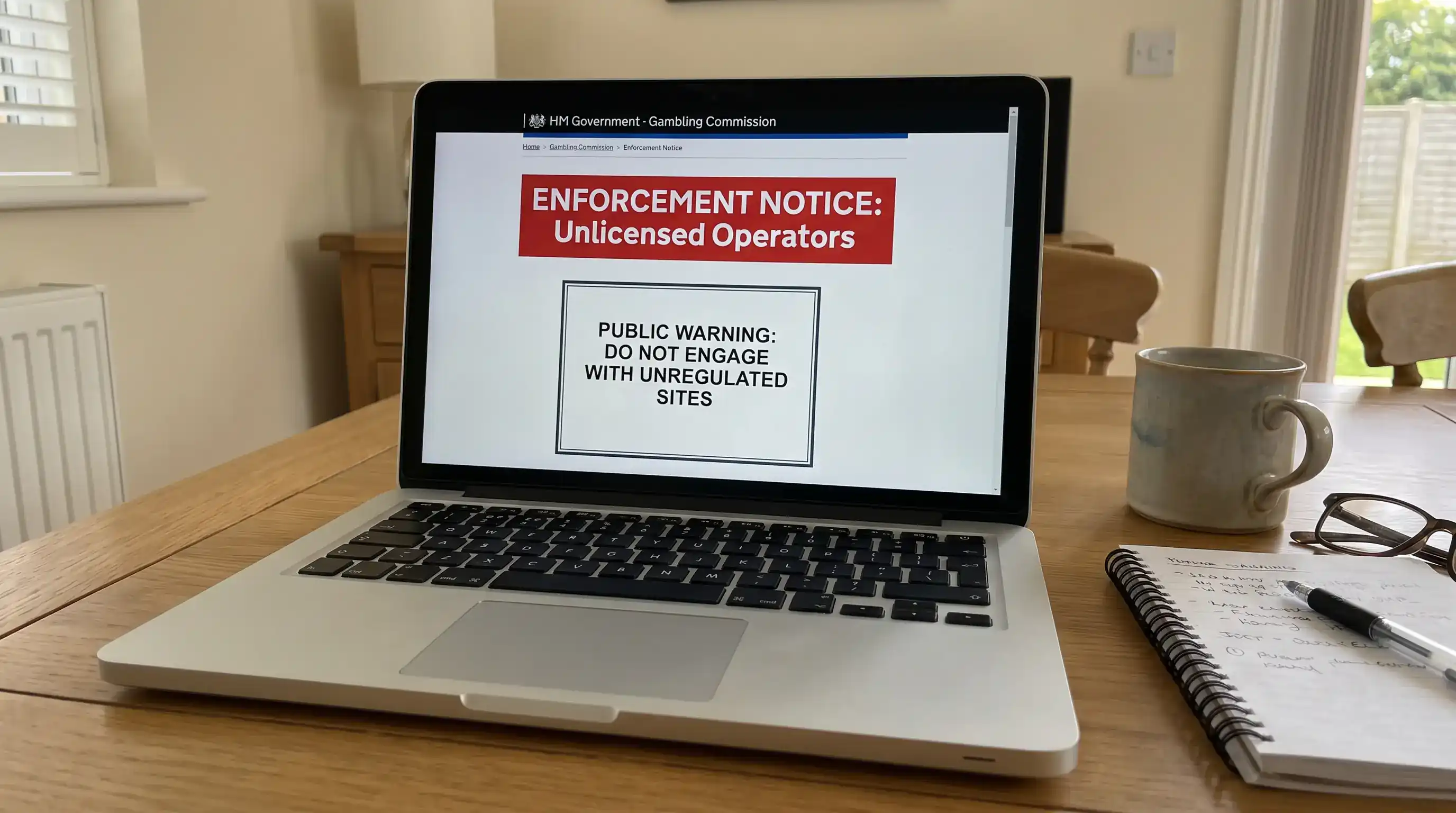
The UKGC has been aggressive in its enforcement posture. The commission sent more than 102,000 URLs to Google for removal and closed 264 unlicensed gambling sites in the last reporting cycle — a tenfold increase over the previous year. That enforcement intensity signals a regulator unwilling to tolerate unlicensed operators serving UK consumers, regardless of whether those operators are traditional sportsbooks or prediction market exchanges.
For UK punters, the practical path to accessing NHL prediction-style markets runs through UKGC-licensed bookmakers that offer exchange or peer-to-peer betting features. Some UK operators provide exchange-style pricing on NHL outcomes, where you can back or lay selections at odds determined by other users rather than the house. The margin is lower than a traditional book, though liquidity on NHL markets can be thin outside of playoff season.
The long-term trajectory is clear: prediction markets and traditional sportsbooks are converging. UK regulation will likely adapt to accommodate that convergence eventually, but as of 2026, the safest and most practical approach for UK-based NHL bettors is to operate within the UKGC-licensed ecosystem while watching how the prediction market space evolves.
Are NHL prediction markets available to UK bettors?
Not directly. Kalshi is restricted to US residents, and Polymarket does not hold a UK Gambling Commission licence. UK bettors can access exchange-style NHL betting through UKGC-licensed platforms that offer peer-to-peer or exchange features, though liquidity on NHL markets varies. Participating in unlicensed prediction markets from the UK carries no consumer protection and may violate platform terms of service.
How do prediction markets differ from sportsbooks?
In a prediction market, you trade contracts with other participants at prices set by supply and demand, and the combined implied probability typically sums to 100%. At a traditional sportsbook, you bet against the bookmaker at odds that include a built-in margin, pushing the combined implied probability above 100%. Prediction markets generally offer lower fees but may have lower liquidity on niche markets like NHL.
Prepared by the NHL Hockey Bets editorial staff.